


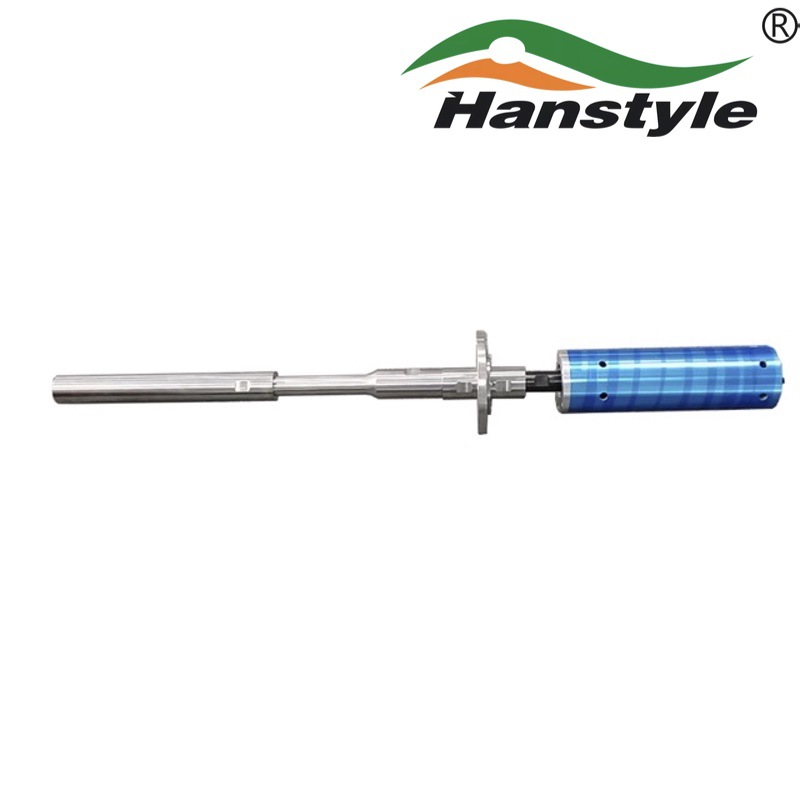
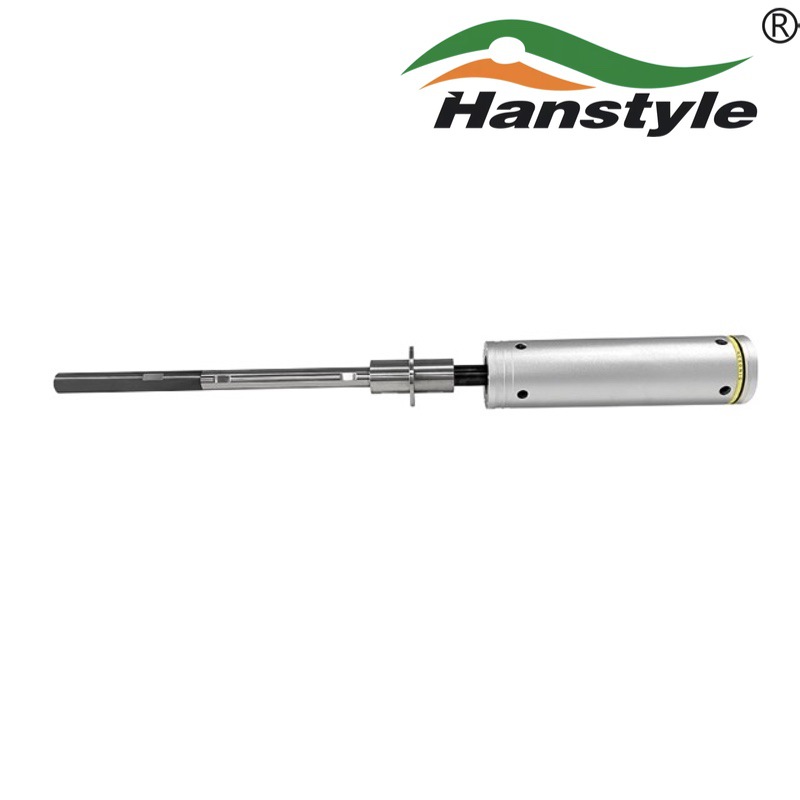
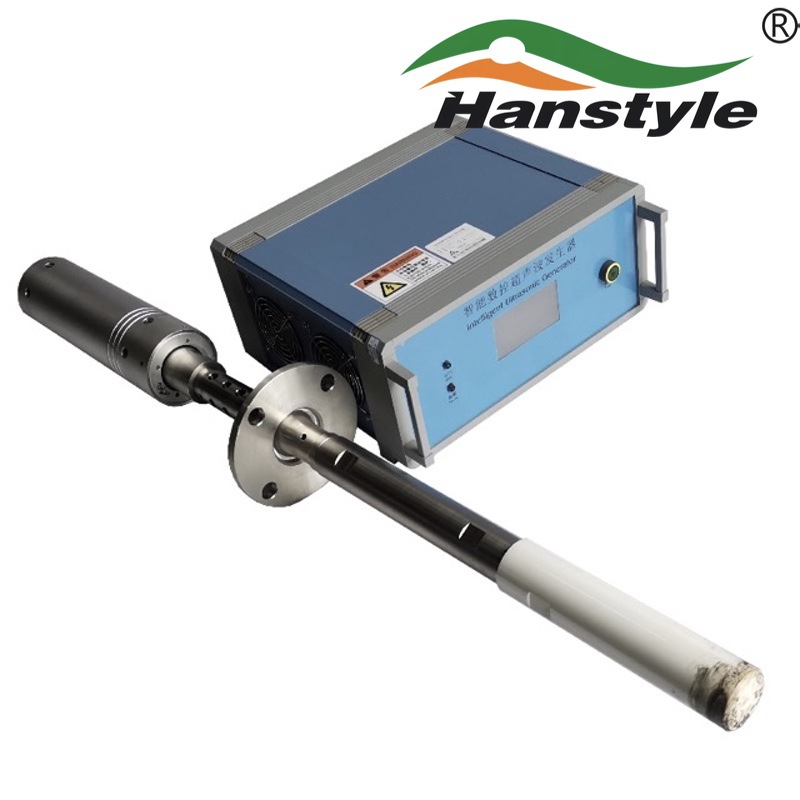
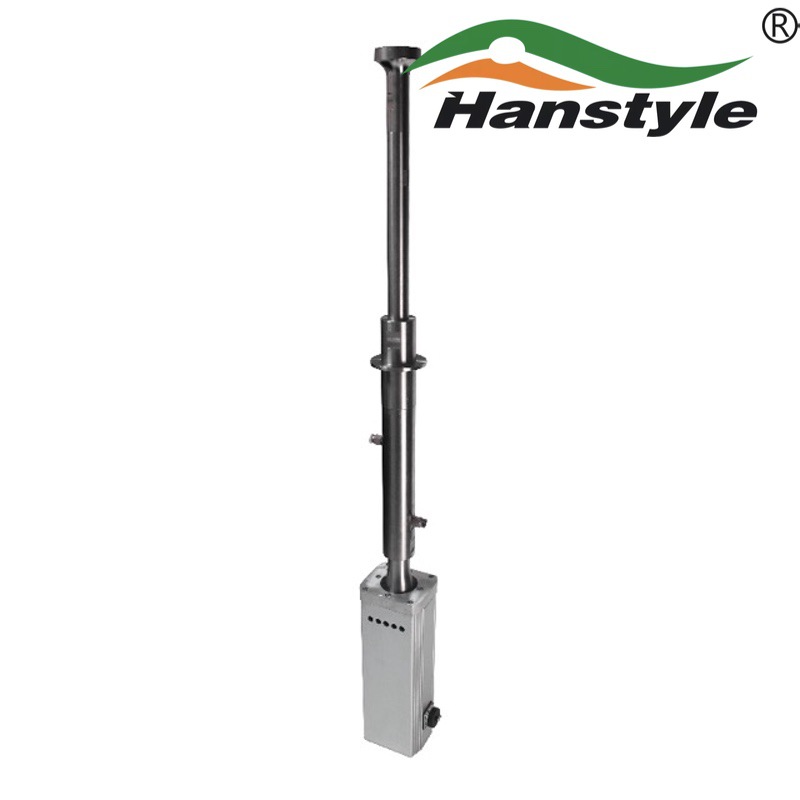
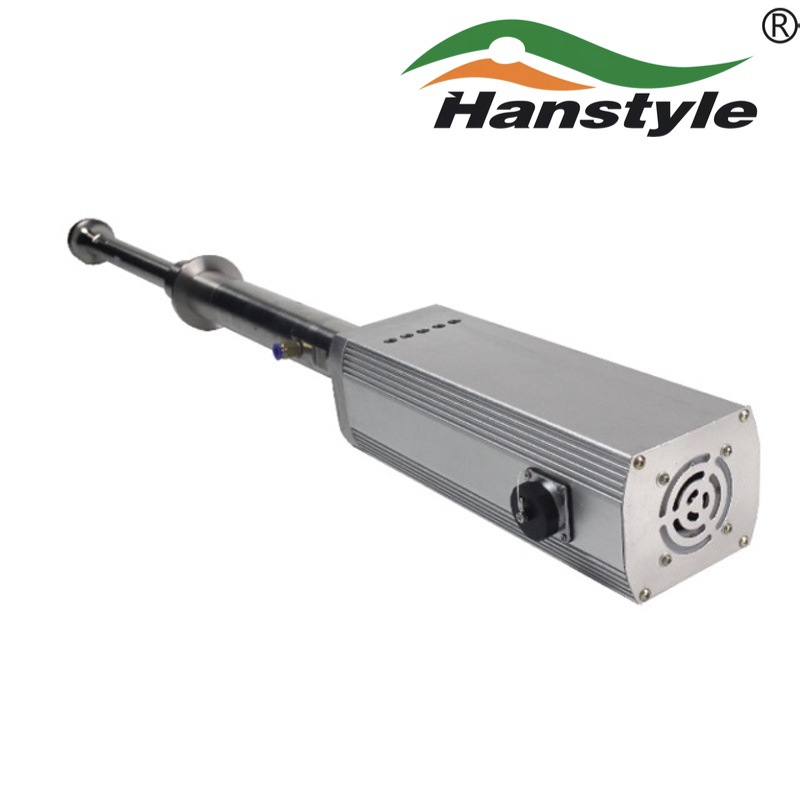
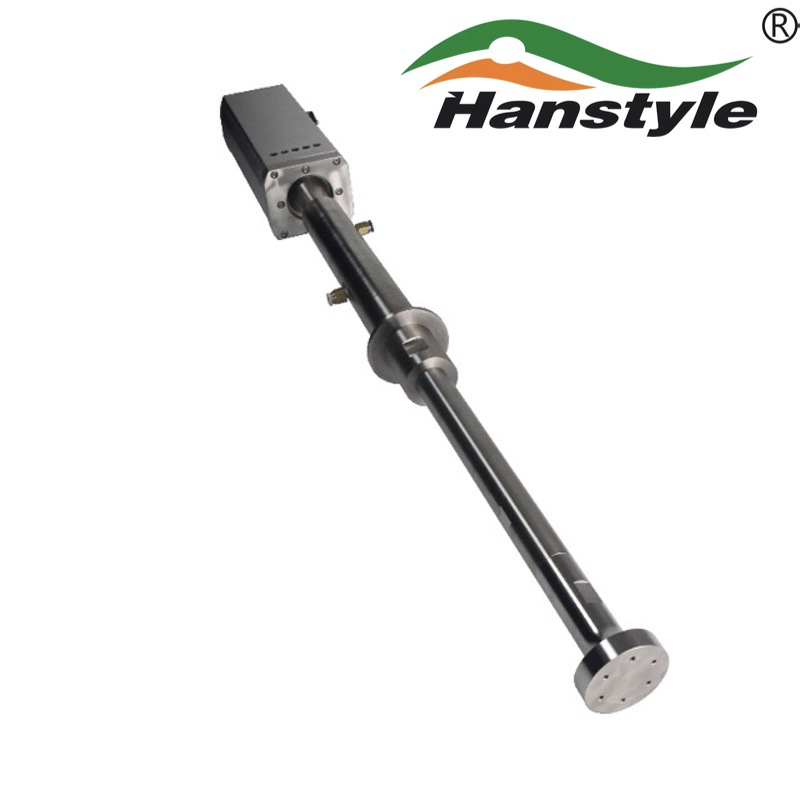
20KHz Ultrasonic Cavitation Metal Processor for Aluminum
Introduction:
|
In the process of metal solidification, ultrasonic vibration is introduced, the solidification structure changes from coarse columnar crystal to uniform and fine equiaxed crystal, and the macro and micro segregation of metal is improved. It is generally believed that high-energy ultrasound is useful in ultrasonic treatment, ultrasonic metal treatment, ultrasonic grain refinement, ultrasonic metal solidification, ultrasonic melt defoaming, ultrasonic crystallization, ultrasonic cavitation, ultrasonic casting, ultrasonic solidification structure, ultrasonic metal continuous casting and other aspects.
The processed melt is stored in a specific container, such as a crucible, smelting furnace, crystallization furnace. There are many ways to transmit ultrasonic energy into the metal melt. Among them, it is undoubtedly the most effective way to insert the ultrasonic tool head into the melt and directly emit ultrasonic waves into the molten metal liquid. When the melt is cooled and crystallized, it is also affected by strong ultrasonic wave, and the material properties change accordingly. For a specific melt, the smaller the melt volume, the greater the output power of the ultrasonic generator, and the longer the ultrasonic action time, the higher the ultrasonic comprehensive action intensity. In other words, we can also control the effect of ultrasonic action by controlling the amount of metal melt, the output power of ultrasonic generator, and the time of ultrasonic action to find the best balance between ultrasonic action and actual effect. |
 |
Application:
- 1. High strength aluminum alloy and magnesium alloy casting
2. Production of aluminum and magnesium alloy bars and plates
3. Crystallization degassing of various alloy materials, motor rotors, etc
4. Casting of various metal matrix composites and high-strength aluminum alloy pistons.
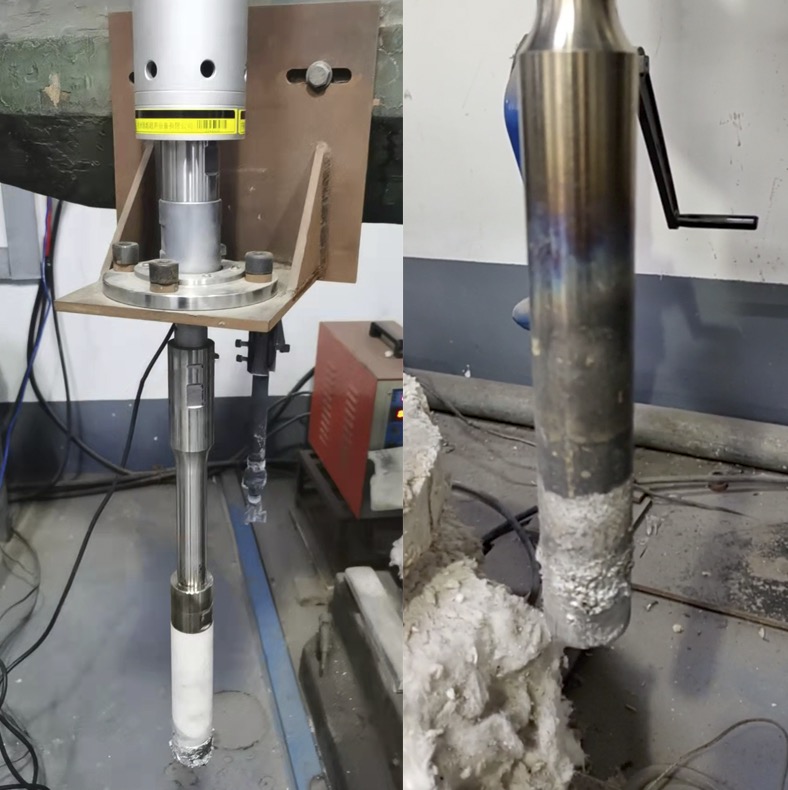
Demonstration Of The Working Performance:
Specifications:
|
Model |
H-UMP10 |
H-UMP15 |
H-UMP20 |
|
Frequency |
20 ± 1 KHz |
||
|
Power |
1000VA |
1500VA |
2000VA |
|
Input Voltage |
220±10%(V) |
||
|
Maximum bearing temperature |
800℃ |
||
|
Probe Diameter |
31mm |
45mm |
45mm |
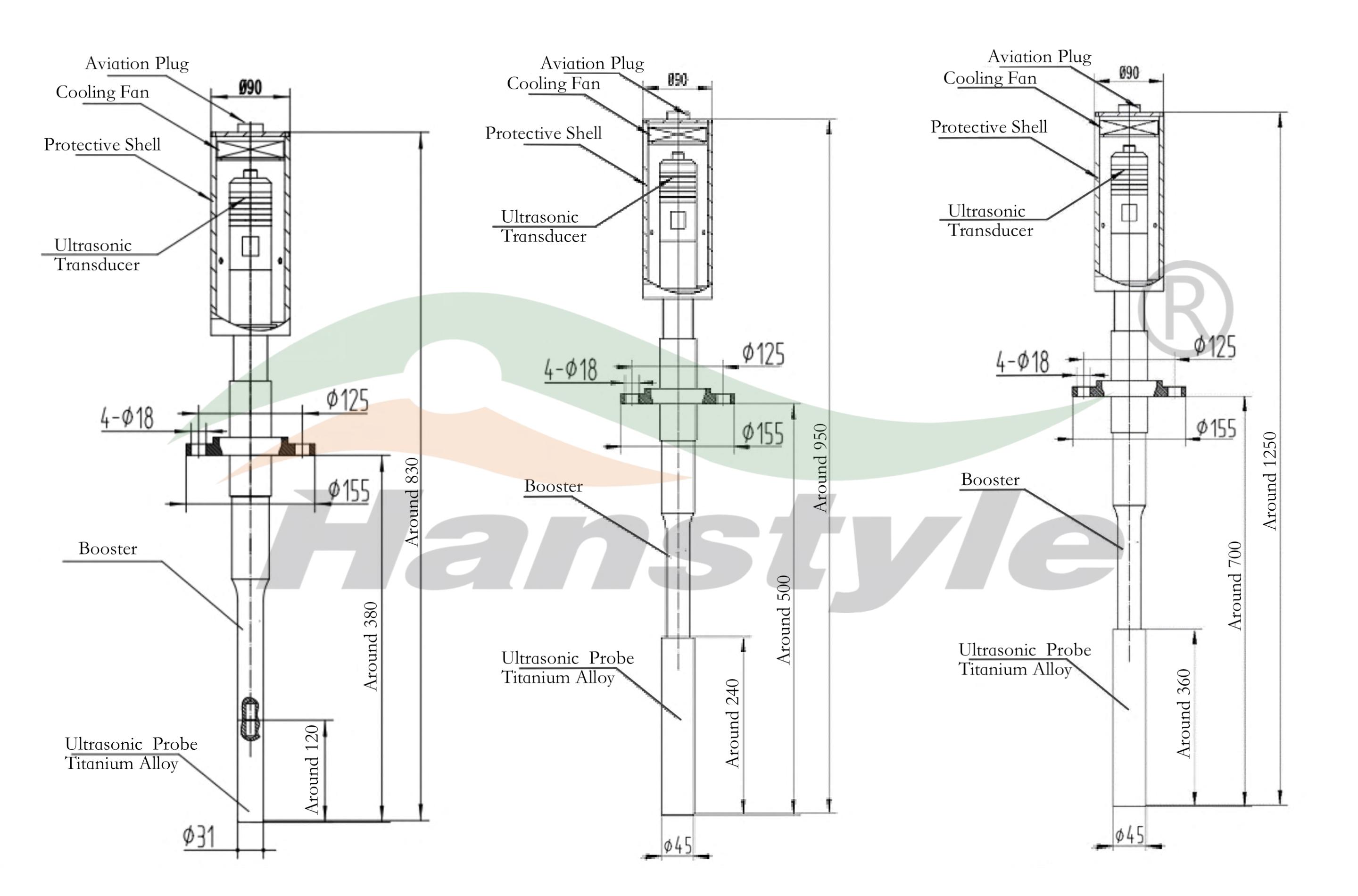
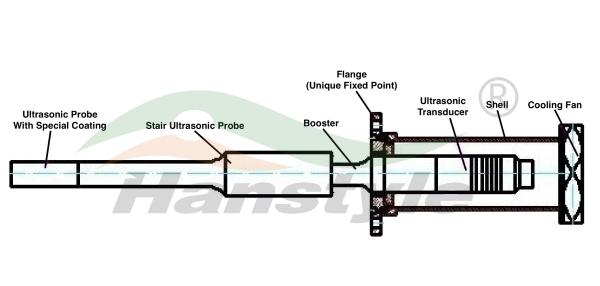
Ultrasonic Vibrator Reference Size
 |
Advantage:
-
1. High temperature resistance: the maximum bearing temperature is 800 ℃.
2. Easy installation: fixed by flange connection.
3. Corrosion resistance: use high-strength titanium alloy tool head.
4. High power: the maximum power of a single radiant head can reach 3000W.
- Comments From Clients:

Payment & Shipping:
| Minimum Order Quantity | Price(USD) | Packaging Details | Supply Ability | Delivery Port |
|
1 Piece |
2100~6000 |
normal export packaging | 50000pcs | Shanghai |


Ultrasonic cavitation, a process where ultrasonic waves generate cavities or bubbles in a liquid metal, leads to numerous beneficial transformations in the material. When these cavities collapse, they generate shock waves that profoundly affect the metal's solidification process. The introduction of ultrasonic vibration effectively changes the solidification pattern of metals from coarse columnar crystals to uniform and fine equiaxed crystals. This transformation is crucial for industries relying on high-quality metal casts, as it directly correlates to enhanced mechanical properties and longevity of the final product. By adopting the High Efficiency 20KHz Industrial Ultrasonic Metal Melt Processor, Hanspire is not just committing to superior metal treatment but is also paving the way for sustainable and efficient manufacturing practices. This processor significantly reduces the energy consumption and time required for metal treatment processes, illustrating an impeccable blend of innovation with environmental consciousness. Moreover, the uniformity in metal structure achieved through ultrasonic cavitation minimizes the need for further processing, reducing waste and improving overall production efficiency. As we delve deeper into the capabilities of this technology, the promise it holds for transforming the metal treatment landscape becomes increasingly evident, making it an indispensable tool for forward-thinking industries.