


ultrasonic transducer
Hangzhou Hanspire Automation Co., Ltd., founded in 1993, stands at the forefront of the ultrasonic technology industry, earning a prestigious reputation as a leading ultrasonic transducer manufacturer. Nestled in the vibrant heart of Hangzhou City, Hanspire boasts a sprawling 20,000 square meters of meticulously developed infrastructure, fueled by an investment of 80 million RMB and driven by a team of over 150 dedicated professionals.
Hanspire excels in the export of high-quality ultrasonic piezoelectric transducers to a global market, steadfastly aligning with the industrious ethos of "Quality determines the future!" Their ultrasonic automation equipment includes the High Power Ultrasonic Converter 15KHz, High Stability Piezoelectrical 20KHz, and High Quality Piezoelectrical 28KHz transducers. These transducers are indispensable in converting high-frequency electrical energy into mechanical vibrations, delivering unmatched performance and reliability.
With a robust presence in both domestic and international markets, Hanspire's sophisticated facilities and strict compliance with the IS9001-2000 quality system certification ensure the delivery of superior products. Renowned for their exceptional piezo transducer technology, Hanspire remains committed to innovation and excellence, continuously propelling the company toward new horizons in the ultrasonic sector, while maintaining a strong emphasis on quality, credit, and contract integrity.
Hanspire excels in the export of high-quality ultrasonic piezoelectric transducers to a global market, steadfastly aligning with the industrious ethos of "Quality determines the future!" Their ultrasonic automation equipment includes the High Power Ultrasonic Converter 15KHz, High Stability Piezoelectrical 20KHz, and High Quality Piezoelectrical 28KHz transducers. These transducers are indispensable in converting high-frequency electrical energy into mechanical vibrations, delivering unmatched performance and reliability.
With a robust presence in both domestic and international markets, Hanspire's sophisticated facilities and strict compliance with the IS9001-2000 quality system certification ensure the delivery of superior products. Renowned for their exceptional piezo transducer technology, Hanspire remains committed to innovation and excellence, continuously propelling the company toward new horizons in the ultrasonic sector, while maintaining a strong emphasis on quality, credit, and contract integrity.
-
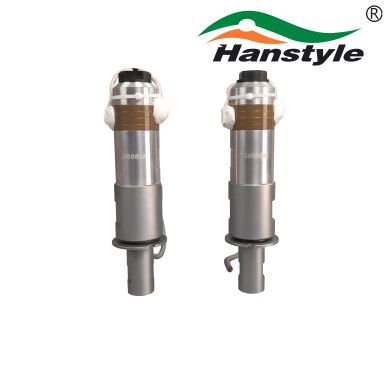
High Stability Piezoelectrical 20KHz Ultrasonic Welding Transducer For Plastic Welding Machine And Mask Machine
-
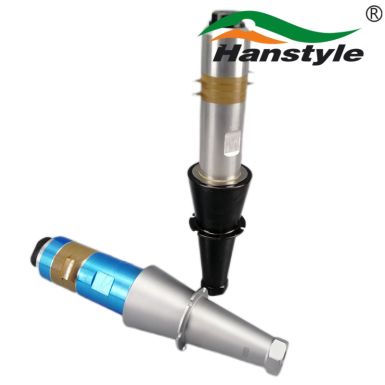
High Power Ultrasonic Converter 15KHz Ultrasonic Welding Transducer For Plastic Welding Machine
-

High Quality Piezoelectrical 28KHz Ultrasonic Welding Transducer For Spot Welding Device
-
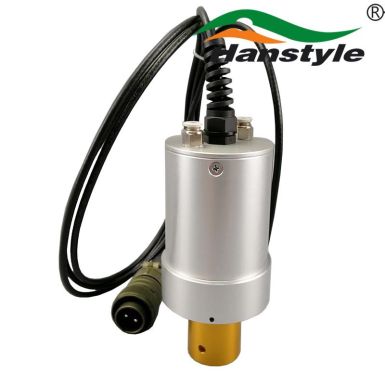
High Efficiency High Power Ultrasonic Transducer For Dukane 41S30 Replacement
-
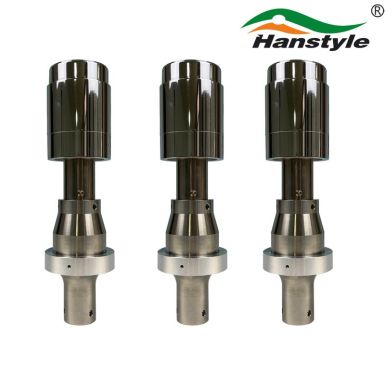
High Quality 20KHz Ultrasonic Welding Transducer With Booster For Branson 902 Replacement
The Frequent FAQs of Ultrasonic Transducer
What does an ultrasonic transducer do?▾
Ultrasonic transducers are remarkable devices that play an integral role in various industries, utilizing the principles of sound waves to perform a multitude of functions. At their core, these transducers convert electrical energy into mechanical energy in the form of ultrasonic waves, and vice versa. This conversion process relies heavily on the piezo transducer, a component that exploits the piezoelectric effect to generate high-frequency sound waves beyond the range of human hearing.
An ultrasonic transducer operates by transmitting and receiving ultrasonic waves that can penetrate media such as liquids, solids, and even gases. The heart of this device is often a piezo transducer. Within this component, ceramic or crystal materials exhibit piezoelectricity, which is the ability to generate an electric charge in response to mechanical stress. When an alternating current is applied, the piezo material oscillates at ultrasonic frequencies, producing sound waves. Conversely, it can also detect these waves by converting the returning sound signals back into electrical signals.
Ultrasonic transducers are widely used in medical imaging, such as in ultrasound machines, where they create images of internal body structures. They emit sound waves into the body, and the reflected echoes are used to construct visual representations of tissues and organs. Beyond healthcare, their applications extend to industrial settings for non-destructive testing, where they inspect materials and structures for integrity without causing damage. The ability to detect flaws such as cracks or voids in metals and composites is invaluable to maintaining safety and quality standards.
The versatility of ultrasonic transducers is evident in their ability to perform precise measurements. For example, in fluid measurement systems, these devices accurately gauge liquid levels and flow rates by analyzing the time it takes for sound waves to travel through the fluid and return to the transducer. This capability is crucial in industries such as oil, gas, and water management, where managing fluid dynamics is essential.
Another fascinating application is in cleaning technologies. Ultrasonic cleaners leverage high-frequency sound waves to agitate a cleaning solution, effectively removing dirt and contaminants from objects. This method is popular in sectors ranging from jewelry to automotive, providing an efficient and thorough cleaning process that reaches even the smallest crevices.
The use of ultrasonic transducers also extends to the development of proximity sensors and range-finding devices. These devices use sound waves to determine the distance to an object by measuring the time interval between emission and reception of the sound. This technology is instrumental in robotics, automotive safety systems, and even in everyday appliances, offering accurate and reliable spatial awareness.
Ultrasonic transducers, driven by the innovative piezo transducer component, are versatile and indispensable in modern technology. Their ability to convert electrical energy into ultrasonic sound waves permits a wealth of applications, from medical diagnostics to industrial inspection, and fluid measurement to precision cleaning. The continued advancement in ultrasonic transducer technology promises even broader applications and enhanced capabilities, underscoring its importance across multiple fields. As industries increasingly rely on efficient and non-invasive techniques, the role of ultrasonic transducers is poised to expand, contributing to technological progress and improved processes worldwide.
The Basics of Ultrasonic Transducers
An ultrasonic transducer operates by transmitting and receiving ultrasonic waves that can penetrate media such as liquids, solids, and even gases. The heart of this device is often a piezo transducer. Within this component, ceramic or crystal materials exhibit piezoelectricity, which is the ability to generate an electric charge in response to mechanical stress. When an alternating current is applied, the piezo material oscillates at ultrasonic frequencies, producing sound waves. Conversely, it can also detect these waves by converting the returning sound signals back into electrical signals.
Ultrasonic transducers are widely used in medical imaging, such as in ultrasound machines, where they create images of internal body structures. They emit sound waves into the body, and the reflected echoes are used to construct visual representations of tissues and organs. Beyond healthcare, their applications extend to industrial settings for non-destructive testing, where they inspect materials and structures for integrity without causing damage. The ability to detect flaws such as cracks or voids in metals and composites is invaluable to maintaining safety and quality standards.
Advanced Applications and Benefits
The versatility of ultrasonic transducers is evident in their ability to perform precise measurements. For example, in fluid measurement systems, these devices accurately gauge liquid levels and flow rates by analyzing the time it takes for sound waves to travel through the fluid and return to the transducer. This capability is crucial in industries such as oil, gas, and water management, where managing fluid dynamics is essential.
Another fascinating application is in cleaning technologies. Ultrasonic cleaners leverage high-frequency sound waves to agitate a cleaning solution, effectively removing dirt and contaminants from objects. This method is popular in sectors ranging from jewelry to automotive, providing an efficient and thorough cleaning process that reaches even the smallest crevices.
The use of ultrasonic transducers also extends to the development of proximity sensors and range-finding devices. These devices use sound waves to determine the distance to an object by measuring the time interval between emission and reception of the sound. This technology is instrumental in robotics, automotive safety systems, and even in everyday appliances, offering accurate and reliable spatial awareness.
Conclusion
Ultrasonic transducers, driven by the innovative piezo transducer component, are versatile and indispensable in modern technology. Their ability to convert electrical energy into ultrasonic sound waves permits a wealth of applications, from medical diagnostics to industrial inspection, and fluid measurement to precision cleaning. The continued advancement in ultrasonic transducer technology promises even broader applications and enhanced capabilities, underscoring its importance across multiple fields. As industries increasingly rely on efficient and non-invasive techniques, the role of ultrasonic transducers is poised to expand, contributing to technological progress and improved processes worldwide.
What is the principle of an ultrasound transducer?▾
The Principle of Ultrasound Transducers
Ultrasound Technology Overview
Ultrasound transducers are pivotal components in modern medical imaging, utilizing sound waves to produce images of the internal structures of the body. The underlying principle of their operation is rooted in the piezoelectric effect, which is fundamental to generating and receiving ultrasound waves. These transducers are designed to perform dual functions: emitting sound waves and capturing the echoes that return from various internal tissues. This capability allows healthcare professionals to conduct non-invasive examinations, providing invaluable insights into the human body's condition without the need for surgical intervention.
The Role of Piezoelectricity
At the heart of the ultrasound transducer lies the ultrasonic piezoelectric transducer, a device that effectively converts electrical energy into mechanical energy and vice versa. This conversion is made possible by the piezoelectric crystals housed within the transducer. These crystals, typically made from materials such as lead zirconate titanate, possess the unique ability to generate an electric charge in response to mechanical stress. When an electrical voltage is applied to the piezoelectric crystal, it vibrates at high frequencies, producing ultrasound waves that propagate through the body.
Transmission and Reception of Sound Waves
The operation of an ultrasound transducer involves the precise control and manipulation of sound waves. Initially, the transducer emits sound waves that travel through the body until they encounter boundaries between different tissues. Each boundary reflects a portion of the sound waves back to the transducer, where they are initially captured as mechanical vibrations. These vibrations induce a mechanical stress on the piezoelectric crystals, generating a corresponding electrical charge. The transducer then converts these charges into electrical signals, which are transmitted to the ultrasound machine for processing and image generation.
Image Formation and Analysis
The conversion of reflected sound waves into visual images is achieved through sophisticated signal processing techniques. The electrical signals, representing varying echoes, are analyzed to determine the distance and composition of the tissues they encountered. By calculating the time it takes for the echoes to return and the intensity of the signals, the ultrasound machine constructs detailed images of the internal anatomy. These images, known as sonograms, provide real-time feedback and are instrumental in diagnosing a myriad of conditions.
Advancements in Ultrasonic Transducer Design
The evolution of ultrasound technology has led to significant advancements in the design and functionality of ultrasonic piezoelectric transducers. Modern transducers are highly sensitive, capable of producing high-resolution images that enhance diagnostic accuracy. Innovations in miniaturization have also facilitated the development of specialized transducers for diverse medical applications, ranging from fetal monitoring to cardiac assessments. Moreover, the integration of advanced materials and manufacturing techniques has resulted in transducers that are both durable and efficient, ensuring their reliability in clinical settings.
Conclusion
In summary, the principle of an ultrasound transducer is firmly anchored in the piezoelectric effect, enabling the generation and reception of sound waves for medical imaging. Through the innovative use of ultrasonic piezoelectric transducers, healthcare professionals can visualize the internal structures of the body with precision and clarity. This non-invasive method continues to be a cornerstone of diagnostic medicine, advancing our ability to detect and monitor various health conditions with confidence.
Ultrasound Technology Overview
Ultrasound transducers are pivotal components in modern medical imaging, utilizing sound waves to produce images of the internal structures of the body. The underlying principle of their operation is rooted in the piezoelectric effect, which is fundamental to generating and receiving ultrasound waves. These transducers are designed to perform dual functions: emitting sound waves and capturing the echoes that return from various internal tissues. This capability allows healthcare professionals to conduct non-invasive examinations, providing invaluable insights into the human body's condition without the need for surgical intervention.
The Role of Piezoelectricity
At the heart of the ultrasound transducer lies the ultrasonic piezoelectric transducer, a device that effectively converts electrical energy into mechanical energy and vice versa. This conversion is made possible by the piezoelectric crystals housed within the transducer. These crystals, typically made from materials such as lead zirconate titanate, possess the unique ability to generate an electric charge in response to mechanical stress. When an electrical voltage is applied to the piezoelectric crystal, it vibrates at high frequencies, producing ultrasound waves that propagate through the body.
Transmission and Reception of Sound Waves
The operation of an ultrasound transducer involves the precise control and manipulation of sound waves. Initially, the transducer emits sound waves that travel through the body until they encounter boundaries between different tissues. Each boundary reflects a portion of the sound waves back to the transducer, where they are initially captured as mechanical vibrations. These vibrations induce a mechanical stress on the piezoelectric crystals, generating a corresponding electrical charge. The transducer then converts these charges into electrical signals, which are transmitted to the ultrasound machine for processing and image generation.
Image Formation and Analysis
The conversion of reflected sound waves into visual images is achieved through sophisticated signal processing techniques. The electrical signals, representing varying echoes, are analyzed to determine the distance and composition of the tissues they encountered. By calculating the time it takes for the echoes to return and the intensity of the signals, the ultrasound machine constructs detailed images of the internal anatomy. These images, known as sonograms, provide real-time feedback and are instrumental in diagnosing a myriad of conditions.
Advancements in Ultrasonic Transducer Design
The evolution of ultrasound technology has led to significant advancements in the design and functionality of ultrasonic piezoelectric transducers. Modern transducers are highly sensitive, capable of producing high-resolution images that enhance diagnostic accuracy. Innovations in miniaturization have also facilitated the development of specialized transducers for diverse medical applications, ranging from fetal monitoring to cardiac assessments. Moreover, the integration of advanced materials and manufacturing techniques has resulted in transducers that are both durable and efficient, ensuring their reliability in clinical settings.
Conclusion
In summary, the principle of an ultrasound transducer is firmly anchored in the piezoelectric effect, enabling the generation and reception of sound waves for medical imaging. Through the innovative use of ultrasonic piezoelectric transducers, healthcare professionals can visualize the internal structures of the body with precision and clarity. This non-invasive method continues to be a cornerstone of diagnostic medicine, advancing our ability to detect and monitor various health conditions with confidence.
What does the ultrasound transducer detect?▾
Ultrasound technology has revolutionized the way medical professionals visualize and diagnose conditions within the human body. At the heart of this technology lies the ultrasound transducer, a sophisticated device responsible for emitting and receiving sound waves that produce detailed images of internal structures. Understanding what an ultrasound transducer detects is crucial for appreciating its role in modern medicine.
The Role of the Ultrasound Transducer
The ultrasound transducer is an essential component of the ultrasound imaging system. It functions primarily through a piezoelectric element known as the piezo transducer. This element converts electrical energy into mechanical vibrations, generating sound waves that penetrate the body. As these sound waves travel, they encounter different tissues and structures, each of which reflects the waves back to the transducer at varying speeds and intensities.
Upon receiving these reflected waves, the piezo transducer switches roles, transforming the mechanical vibrations back into electrical signals. These signals are then processed by the ultrasound machine to construct real-time images of the scanned area. This dynamic capability allows the transducer to detect various anatomical and pathological conditions, providing invaluable insights for diagnosis and treatment planning.
Detection Capabilities
1. Soft Tissue and Organ Imaging
One of the primary functions of an ultrasound transducer is to detect and image soft tissues and organs. This includes the liver, kidneys, heart, and reproductive organs, among others. Due to its ability to produce real-time images, ultrasound is particularly useful for assessing the movement and function of these organs, such as the beating of the heart or the flow of blood through vessels.
2. Pregnancy and Fetal Development
Ultrasound transducers are instrumental in obstetrics, as they can detect and monitor fetal development throughout pregnancy. They allow healthcare providers to visualize the fetus, assess its growth, and identify any potential abnormalities. The non-invasive nature of ultrasound makes it a preferred choice for frequent monitoring during gestation.
3. Detection of Abnormalities and Pathologies
Beyond imaging normal anatomical structures, ultrasound transducers also play a key role in detecting abnormalities and pathologies. This includes identifying tumors, cysts, and stones in various organs. The ability of the piezo transducer to differentiate between healthy and abnormal tissues based on the reflection characteristics of sound waves is crucial for early diagnosis and intervention.
4. Guidance for Interventional Procedures
Ultrasound transducers are frequently used to guide minimally invasive procedures, such as needle biopsies or fluid drainage. By providing real-time images, they allow clinicians to accurately target specific areas, minimizing risk and improving the effectiveness of the procedure.
Advancements and Innovation
The continuous advancement in piezo transducer technology has further enhanced the detection capabilities of ultrasound devices. Innovations have led to improved image resolution, greater depth of penetration, and enhanced sensitivity, broadening the scope of conditions that can be detected. These advancements continue to expand the applications of ultrasound in both diagnostic and therapeutic settings.
In conclusion, the ultrasound transducer, powered by the piezo transducer, is an indispensable tool in the field of medical imaging. Its ability to detect a wide range of conditions with remarkable precision underscores its critical role in healthcare. As technology advances, the capabilities of ultrasound transducers are poised to expand even further, continuing to improve patient outcomes and advance the field of medicine.
The Role of the Ultrasound Transducer
The ultrasound transducer is an essential component of the ultrasound imaging system. It functions primarily through a piezoelectric element known as the piezo transducer. This element converts electrical energy into mechanical vibrations, generating sound waves that penetrate the body. As these sound waves travel, they encounter different tissues and structures, each of which reflects the waves back to the transducer at varying speeds and intensities.
Upon receiving these reflected waves, the piezo transducer switches roles, transforming the mechanical vibrations back into electrical signals. These signals are then processed by the ultrasound machine to construct real-time images of the scanned area. This dynamic capability allows the transducer to detect various anatomical and pathological conditions, providing invaluable insights for diagnosis and treatment planning.
Detection Capabilities
1. Soft Tissue and Organ Imaging
One of the primary functions of an ultrasound transducer is to detect and image soft tissues and organs. This includes the liver, kidneys, heart, and reproductive organs, among others. Due to its ability to produce real-time images, ultrasound is particularly useful for assessing the movement and function of these organs, such as the beating of the heart or the flow of blood through vessels.
2. Pregnancy and Fetal Development
Ultrasound transducers are instrumental in obstetrics, as they can detect and monitor fetal development throughout pregnancy. They allow healthcare providers to visualize the fetus, assess its growth, and identify any potential abnormalities. The non-invasive nature of ultrasound makes it a preferred choice for frequent monitoring during gestation.
3. Detection of Abnormalities and Pathologies
Beyond imaging normal anatomical structures, ultrasound transducers also play a key role in detecting abnormalities and pathologies. This includes identifying tumors, cysts, and stones in various organs. The ability of the piezo transducer to differentiate between healthy and abnormal tissues based on the reflection characteristics of sound waves is crucial for early diagnosis and intervention.
4. Guidance for Interventional Procedures
Ultrasound transducers are frequently used to guide minimally invasive procedures, such as needle biopsies or fluid drainage. By providing real-time images, they allow clinicians to accurately target specific areas, minimizing risk and improving the effectiveness of the procedure.
Advancements and Innovation
The continuous advancement in piezo transducer technology has further enhanced the detection capabilities of ultrasound devices. Innovations have led to improved image resolution, greater depth of penetration, and enhanced sensitivity, broadening the scope of conditions that can be detected. These advancements continue to expand the applications of ultrasound in both diagnostic and therapeutic settings.
In conclusion, the ultrasound transducer, powered by the piezo transducer, is an indispensable tool in the field of medical imaging. Its ability to detect a wide range of conditions with remarkable precision underscores its critical role in healthcare. As technology advances, the capabilities of ultrasound transducers are poised to expand even further, continuing to improve patient outcomes and advance the field of medicine.