


Tired of PVC parts acting like stubborn toddlers who refuse to stick together, no matter how much heat, glue, or patience you throw at them?
Use an ultrasonic PVC welding machine to bond them quickly and cleanly, following guidelines from this NIST report on ultrasonic welding.
⚙️ Basic Structure of an Ultrasonic PVC Welding Machine
Ultrasonic PVC welding machines use high-frequency vibration to weld plastic parts quickly and cleanly. The system converts electrical energy into mechanical motion to melt and join PVC surfaces.
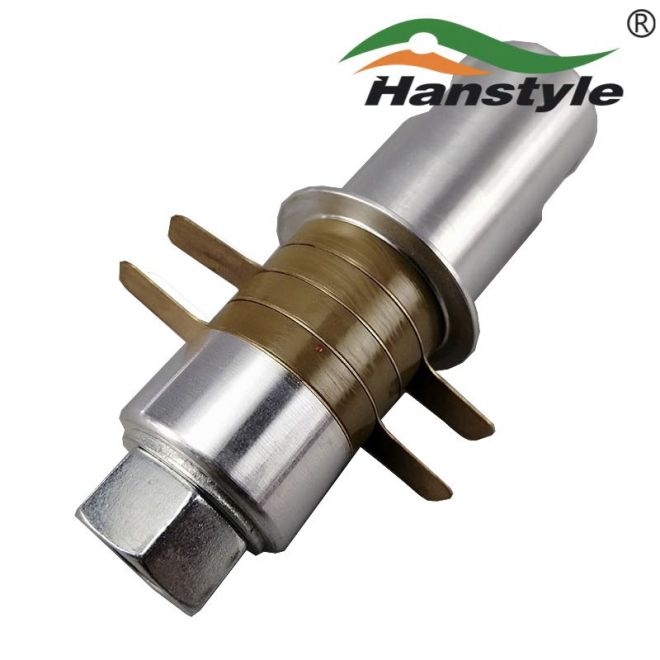
Core parts include the generator, transducer, booster, and horn. High-quality transducers, such as High Power Ultrasonic Converter 15KHz Ultrasonic Welding Transducer For Plastic Welding Machine, ensure stable energy transfer and strong welds.
1. Ultrasonic Generator
The generator converts mains power into high-frequency electrical signals that match the transducer’s resonance frequency for efficient energy use.
- Controls output power and frequency
- Monitors overload and protects circuits
- Allows fine tuning for different PVC parts
2. Ultrasonic Transducer
The transducer changes high-frequency electrical energy into mechanical vibration. Devices like the High Quality Piezoelectrical 28KHz Ultrasonic Welding Transducer For Spot Welding Device deliver precise localized welding.
- Piezoelectric ceramics generate vibration
- Works at fixed frequency (15–40 kHz typical)
- Key to welding speed and stability
3. Booster and Horn Assembly
The booster and horn adjust amplitude and send vibration to the PVC joint area for efficient heat generation and consistent weld quality.
| Component | Main Function |
|---|---|
| Booster | Increases or reduces vibration amplitude |
| Horn | Applies vibration and pressure to workpiece |
4. Mechanical Frame and Control System
The frame provides stable support, while controls set time, pressure, and amplitude. Easy control improves repeatability and reduces operator error.
- Pneumatic or servo press for welding force
- Touchscreen for parameter setting
- Safety covers and emergency stop buttons
🔊 How Ultrasonic Vibrations Generate Heat in PVC Materials
Ultrasonic welding converts high-frequency vibration into frictional heat at the PVC interface. The heat softens the plastic, causing surfaces to fuse without extra glue.
This fast, localized heating forms strong molecular bonds. Using a High Stability Piezoelectrical 20KHz Ultrasonic Welding Transducer For Plastic Welding Machine And Mask Machine improves energy focus and weld reliability.
1. Micro-Slip and Surface Friction
When the horn vibrates, the PVC parts slide microscopically at the joint. This micro-slip creates frictional heat right where welding is needed.
- Energy focuses at contact points
- Surface roughness helps heat build-up
- Heat zone stays small, protecting the part
2. Internal Molecular Friction
Vibration also moves PVC molecules inside the material. This internal motion increases temperature and speeds up melting around the weld line.
| Effect | Result |
|---|---|
| Molecular motion | Faster softening of PVC |
| Localized heating | Short welding cycles |
3. Heat-Build Profile in PVC
Heat rises sharply when vibration starts, then stabilizes as PVC melts and flows. Proper settings avoid burns or weak welds.
4. Solidification and Bond Formation
When vibration stops, pressure stays for a short hold time. The molten PVC cools and solidifies, locking parts into a strong bond.
- Hold pressure prevents gaps
- Cooling fixes joint geometry
- Bond strength often matches base PVC
🧩 Role of Horn, Anvil, and Fixture in Welding Process
The horn, anvil, and fixture guide vibration and force to the weld area. Their design ensures accuracy, repeatability, and stable weld quality.
Good tooling reduces flash, deformation, and rejects, especially in precision PVC parts with thin walls or complex shapes.
1. Horn (Sonotrode)
The horn transfers vibration and pressure to the PVC surface. Its shape must match the part and spread energy evenly across the weld.
- Custom-machined to product profile
- Made from titanium or aluminum
- Designed to avoid hot spots and cracking
2. Anvil (Lower Support)
The anvil supports the lower part and reacts the horn force. It fixes the weld height and protects dimensional accuracy.
| Design Point | Purpose |
|---|---|
| Profiled surface | Holds part in correct position |
| Rigid base | Prevents vibration loss |
3. Fixture (Positioning Device)
The fixture positions each PVC part the same way every cycle, reducing alignment errors and variations in weld strength.
- Guides and pins locate parts
- Quick-change design speeds setups
- Soft inserts protect visible surfaces
⏱️ Welding Parameters: Time, Pressure, and Amplitude Control Principles
Welding parameters control energy input and joint quality. Time, pressure, and amplitude must match PVC type, thickness, and joint design.
Correct settings shorten cycles, prevent burns, and improve strength, making the process stable for mass production.
1. Welding Time Control
Welding time defines how long vibration is applied. Too short gives weak joints; too long may cause flash or warping.
| Mode | Feature |
|---|---|
| Time mode | Fixed vibration duration |
| Energy mode | Stops after target energy |
2. Pressure and Force Settings
Pressure drives the horn into the PVC. Correct force improves contact and heat generation without crushing or deforming the workpiece.
- Low force: poor contact, weak weld
- High force: over-squeeze, thin weld
- Optimized force: balanced heat and strength
3. Amplitude and Power Adjustment
Amplitude is horn movement size. Higher amplitude raises heat faster but needs careful control to protect thin or delicate PVC parts.
- Low amplitude for thin or soft PVC
- High amplitude for thick ribs and bosses
- Fine tuning improves repeatability
🛡️ Safety, Maintenance, and Advantages of Ultrasonic PVC Welding Technology
Ultrasonic PVC welding offers fast, clean, and eco-friendly joining. Proper safety and regular maintenance keep systems reliable and extend equipment life.
No open flame or solvents are needed, which supports safer and greener production lines.
1. Safety Practices
Operators should protect hearing, avoid direct contact with the horn, and follow lockout procedures during setup and repair.
- Use acoustic covers in noisy areas
- Train staff on pinch and burn hazards
- Check safety interlocks regularly
2. Routine Maintenance
Simple daily checks and periodic inspections prevent downtime and keep welding performance stable across large production batches.
| Task | Frequency |
|---|---|
| Clean horn and anvil | Daily |
| Check cables and screws | Weekly |
| Verify frequency tuning | Monthly |
3. Key Advantages
Ultrasonic PVC welding reduces material cost and cycle time while improving aesthetics and strength, making it ideal for automotive, medical, and consumer products.
- No glue or consumables
- Short weld times, often under one second
- Clean joints with minimal post-processing
Conclusion
Ultrasonic PVC welding machines convert electrical energy into precise vibration to weld plastic parts quickly and reliably. Correct tooling and parameters keep heat focused at the joint.
With suitable transducers, horns, and fixtures, manufacturers achieve strong, repeatable welds, lower costs, and cleaner production compared with traditional bonding or mechanical fastening.
Frequently Asked Questions about ultrasonic pvc welding machine
1. What materials can ultrasonic PVC welding machines join?
These machines work best with thermoplastics such as PVC, ABS, PP, and PE. Both parts must be compatible plastics for a strong and stable weld.
2. Do I need adhesives or solvents for ultrasonic PVC welding?
No. Ultrasonic welding uses frictional heat from vibration to melt and fuse the PVC directly, so you do not need glue, solvents, or extra fillers.
3. How long does a typical PVC weld cycle take?
Most cycles last between 0.3 and 1.5 seconds of vibration, plus a short hold time. Exact duration depends on part size, design, and material.
4. Why is frequency (15 kHz, 20 kHz, 28 kHz) important?
Frequency affects amplitude, noise, and suitable part size. Lower frequencies suit larger, tougher welds, while higher ones fit smaller, detailed parts.
5. How can I improve weld consistency in mass production?
Use rigid fixtures, stable transducers, and controlled parameters. Regularly clean tooling, log process data, and keep generator settings locked for each product.