


Introduction
In the complex landscape of modern manufacturing, the quest for uniformity and consistency is paramount. Homogenization, a crucial process borrowed from other industries like dairy, plays a significant role in ensuring the uniformity of manufactured products. This article delves into the intricate process of homogenizing manufacturing, detailing each step, its benefits, challenges, and future trends. With the increasing demand for high-quality products, understanding the homogenization process is essential for manufacturers aiming to maintain competitive advantage.
Key Principles of Homogenization in Manufacturing
● Molecular Consistency
At its core, homogenization in manufacturing seeks to achieve molecular consistency across products. This ensures that every unit maintains uniform characteristics, such as texture, composition, and performance. By breaking down larger particles and distributing them evenly, the process achieves a homogeneity that is critical for both consumer satisfaction and industrial standards.
● Uniform Product Quality Across Batches
Consistency extends beyond individual products to batches. Homogenizing processes ensure that each batch, regardless of production time or conditions, meets established quality benchmarks. This uniformity is vital for manufacturers, suppliers, and consumers alike, ensuring trust in the product's standard and reducing variability.
Machinery and Technology in Homogenization
● Types of Homogenizers
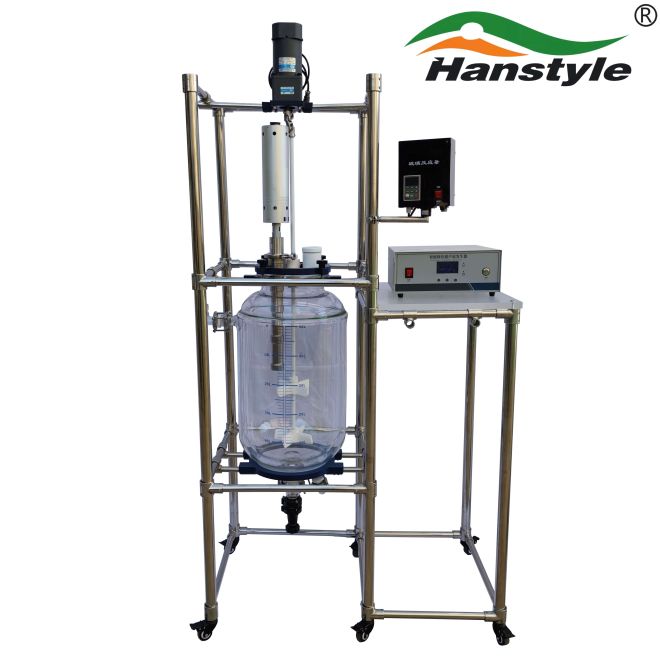
The machinery behind homogenization is diverse, designed to cater to various production needs and scales. homogenizer mixers, including those provided by wholesale homogenizer mixer suppliers, are fundamental. These machines vary from high-pressure models to ultrasonic and mechanical variants, each suited for specific materials and desired outcomes.
● Mechanisms of Action: Cavitation, Shearing, Pressure
Homogenizers work through mechanisms such as cavitation, shearing, and pressure. Cavitation involves the formation and collapse of vapor bubbles, creating intense local pressure that breaks particles. Shearing refers to the forceful interaction of liquid layers, while pressure homogenization forces the product through narrow spaces, reducing particle size significantly. These combined effects ensure thorough homogenization.
Process Flow: Steps in Manufacturing Homogenization
● Initial Raw Material Preparation
The process begins with preparing raw materials. This involves cleaning, sorting, and sometimes pre-processing to ensure that the materials are ready for homogenization. The quality at this stage lays the foundation for effective homogenization.
● High-Pressure Processing Techniques
High-pressure techniques are central to homogenization. These involve specialized homogenizer mixers, often sourced from homogenizer mixer factories, that apply significant force to reduce particle size and achieve uniform distribution. The pressure applied can range widely, depending on the product requirements and equipment capabilities.
Quality Control and Standardization
● Measuring Effectiveness of Homogenization
Quality control in homogenization involves various tests to measure the uniformity and consistency of the final product. Techniques such as particle size analysis and consistency checks are employed to ensure the process's effectiveness. These measurements are crucial in maintaining product quality and meeting regulatory standards.
● Ensuring Product Safety and Compliance
Safety and compliance are non-negotiable in manufacturing. The homogenization process includes steps to satisfy both, ensuring that the products are not only consistent but also safe for consumption or use. This involves adhering to industry regulations and utilizing equipment that meets safety certifications.
Benefits of Homogenizing Manufacturing Processes
● Increased Product Shelf Life
One of the notable benefits of homogenizing is the extension of product shelf life. By achieving uniform particle distribution, the products are less prone to separation, sedimentation, or degradation, which enhances their longevity.
● Enhanced Texture and Appearance
Homogenization significantly improves the texture and appearance of products. This is particularly beneficial in industries like food and cosmetics, where the sensory attributes of a product are crucial to consumer satisfaction. Homogenizers supplied by leading homogenizer mixer manufacturers play a vital role in achieving these outcomes.
Challenges and Limitations in Homogenization
● Energy and Cost Considerations
The energy demand for homogenization is substantial, particularly for high-pressure processes. This translates into higher operational costs, posing a challenge for manufacturers. Balancing cost-efficiency with the need for high-quality homogenization requires strategic planning and investment.
● Potential Impact on Nutritional Content
While homogenization offers many benefits, it's not without downsides. For instance, in food manufacturing, the process can affect the nutritional content of products. It requires careful parameter adjustments to preserve essential nutrients while achieving desired consistency.
Applications of Homogenization Beyond Dairy
● Other Industries Utilizing Homogenization
Homogenization isn't limited to dairy; it's integral in sectors like pharmaceuticals, cosmetics, and food processing. Each industry adapts the process to its specific needs, whether it's for emulsifying compounds or improving product stability.
● Expansion into New Product Domains
As technology advances, the application of homogenization is expanding into new domains. From nanotechnology to biotechnology, the ability to produce consistent and uniform products is increasingly valuable, opening new avenues for innovation.
Future Trends in Homogenization Technology
● Innovations in Equipment and Methods
The future of homogenization lies in equipment and methodological innovations. Emerging technologies promise more efficient and environmentally friendly processes. Leading homogenizer mixer suppliers are at the forefront, developing advanced machines capable of meeting the evolving demands of the industry.
● Environmental and Sustainability Considerations
Sustainability is becoming a priority in manufacturing, and homogenization is no exception. Eco-friendly equipment and processes are being developed to reduce energy consumption and waste, aligning with global sustainability goals.
Conclusion: The Role of Homogenization in Modern Manufacturing
Homogenization is a cornerstone of modern manufacturing, ensuring product quality, consistency, and longevity. As industries expand and consumer demands grow, the need for effective homogenization processes becomes even more critical. Manufacturers and suppliers, including those specializing in homogenizer mixers, continue to innovate and adapt, ensuring that homogenization remains a vital component of the manufacturing landscape.
Hanspire: Pioneering Excellence in Manufacturing
Hangzhou Hanspire Automation Co., Ltd., established in 1993, is a significant player in the machinery and ultrasonic technology industries. Located in Hangzhou, China, Hanspire boasts a vast manufacturing facility and a dedicated workforce. With a legacy in ductile iron, cast steel, and high-tech ultrasonic automation, Hanspire is committed to leading the industry in quality and innovation. Upholding the mantra "Quality determines the future," Hanspire remains a trusted name, providing reliable products and services worldwide.
