


You’re staring at your project, wishing it could magically sense distance like a bat, but instead it just sits there blind, confused, and probably judging you.
Learn ultrasonic sensor basics, working principles, and 2026-ready uses to fix that; see this detailed overview: Ultrasonic Sensors Report.
🔊 Fundamentals of Ultrasonic Sensor Operation: Emission, Echo Reception, and Timing
Ultrasonic sensors use high-frequency sound waves to detect objects and measure distance. They work reliably in harsh industrial environments and support many 2026 smart automation systems.
By timing the echo return, controllers can calculate distance in real time. This makes ultrasonic sensing useful for robotics, quality control, and liquid-level monitoring.
1. Core Components and Signal Path
Each sensor has a transmitter, receiver, signal processor, and interface electronics. Together they convert electrical energy into sound, capture echoes, and output clean digital or analog data.
- Transducer: emits and receives ultrasonic pulses
- Driver circuit: powers and shapes the pulse
- DSP or microcontroller: filters noise and measures time
- Output: voltage, current loop, or serial data
2. Emission of Ultrasonic Pulses
The transducer vibrates at a set frequency, often 20–400 kHz, and sends a short sound burst into the air or liquid. Pulse width and repetition rate define measurement speed.
3. Echo Reception and Signal Conditioning
The receiver picks up the echo reflected from objects. Amplifiers and filters remove noise, while envelope detection and thresholds help distinguish valid targets from background reflections.
4. Time-of-Flight to Distance Conversion
The controller measures the time between pulse emission and echo return. It multiplies half of this time by sound speed to calculate distance with high accuracy.
📡 Distance Measurement Techniques and Accuracy Factors in Ultrasonic Sensing Systems
Ultrasonic distance sensing mainly relies on time-of-flight calculation. In 2026, better chips and algorithms improve accuracy, even in changing temperature and noisy factory environments.
Engineers also combine ultrasonic sensing with vision or radar to reduce blind spots and increase measurement confidence in critical safety or quality tasks.
1. Basic Time-of-Flight Distance Formula
The controller uses a simple formula: distance = (speed of sound × echo time) ÷ 2. This works for both air and liquid measurements, with adjusted sound speed values.
| Medium | Approx. Sound Speed (m/s) |
|---|---|
| Air (20°C) | 343 |
| Water | 1480 |
| Oil (typical) | 1300–1500 |
2. Environmental Effects and Temperature Compensation
Temperature, humidity, and pressure change sound speed. Modern sensors add temperature probes and software compensation to maintain stable readings across wide operating conditions.
3. Resolution, Linearity, and Angle of Detection
Resolution defines the smallest change the sensor can detect. Linearity shows how closely readings match real distance. Beam angle affects side reflections and blind zones.
4. Data Analysis and Calibration for High Accuracy
Advanced systems use calibration tables, filtering, and statistical analysis to reduce drift. Below is a sample bar chart configuration for comparing sensor accuracy classes.
🏭 Key Industrial Applications of Ultrasonic Sensors in 2026 Smart Manufacturing
In 2026, ultrasonic sensors support flexible, data-driven production lines, helping factories measure levels, detect parts, and protect equipment with non-contact monitoring.
1. Level and Flow Monitoring in Tanks and Pipes
Plants widely use ultrasonic level sensors to track liquids, slurries, and bulk solids without direct contact, improving hygiene, safety, and predictive maintenance schedules.
- Chemical storage tanks
- Water and wastewater systems
- Food, drink, and pharmaceutical vessels
2. Robotics, Positioning, and Material Handling
Mobile robots and conveyor systems use ultrasonic sensors to avoid collisions and confirm part presence in bins, chutes, and pick-up zones, even with dusty surfaces.
3. Ultrasonic Power Processing in Smart Factories
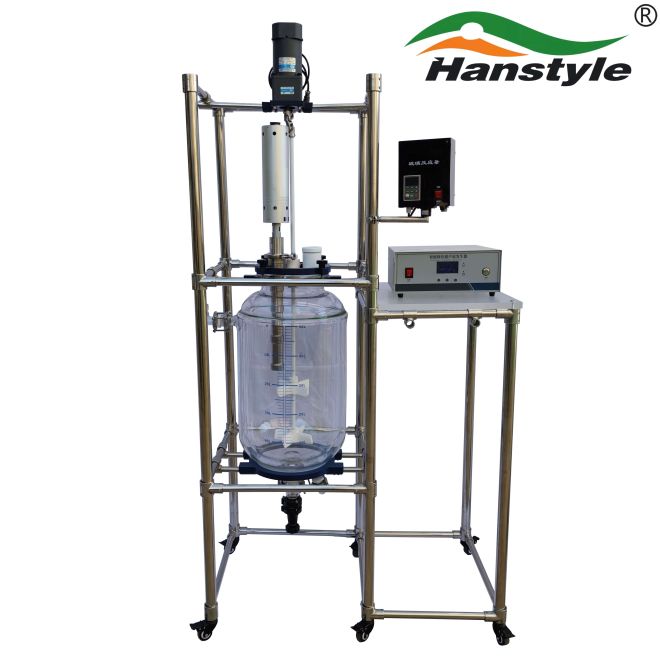
High-power ultrasonic tools work with sensors to control energy delivery. Systems like the High Stability 20KHz Industrial Ultrasonic Homogenizer For Medical Herbs Extraction And Make-up Emulsification enable precise, repeatable processing.
🚗 Role of Ultrasonic Sensors in Automotive Safety, Parking, and Assistance Systems
Ultrasonic sensors remain core to short-range automotive detection in 2026, helping drivers and automated systems handle low-speed, close-range maneuvers safely.
1. Parking Assist and Low-Speed Obstacle Detection
Bumpers house multiple ultrasonic sensors that scan near the vehicle. They detect curbs, walls, and pedestrians, providing audio and visual alerts for safe parking.
2. Blind-Spot, Cross-Traffic, and Door Safety Support
Side-mounted sensors help sense nearby objects when changing lanes, reversing, or opening doors. They reduce minor collisions and support advanced driver assistance features.
3. Fusion with Cameras and Radar in 2026 Platforms
New vehicles fuse ultrasonic data with camera and radar inputs. This improves object classification at close range and supports automated parking and valet systems.
🏠 Integration of Ultrasonic Sensors in Smart Homes and Building Automation
Smart buildings in 2026 use ultrasonic sensors for occupancy, security, and energy control, working alongside infrared and vision technologies for reliable indoor detection.
1. Occupancy Sensing and Energy Savings
Ultrasonic presence sensors trigger lights, HVAC, and ventilation only when people are present, cutting wasted energy in offices, classrooms, and shared spaces.
- Conference rooms and open offices
- Hallways and restrooms
- Smart residential rooms
2. Security, Intrusion, and Perimeter Monitoring
Non-contact sensing detects motion in restricted zones without visible cameras. It adds a discrete layer of protection for sensitive rooms, labs, and data centers.
3. Smart Appliances and Home Research Labs
Ultrasonic modules enter advanced home devices and compact labs. Tools like the High Efficiency Laboratory Ultrasonic Sonochemistry 20kHz Ultrasonic Homogenizer For Dispersing Mixing Extraction Experiment and the High Efficiency 20KHz Industrial Ultrasonic Metal Melt Processor For Liquid Aluninum Treatment show how precise control meets automation.
Conclusion
Ultrasonic sensor technology in 2026 delivers accurate, non-contact distance and presence measurement for factories, vehicles, and smart buildings. Better electronics and signal processing improve stability and cut integration time.
By understanding working principles, accuracy factors, and real-world applications, engineers and buyers can select the best ultrasonic solution for safety, quality, and energy efficiency goals.
Frequently Asked Questions about an ultrasonic sensor
1. What is an ultrasonic sensor?
An ultrasonic sensor is a device that uses high-frequency sound waves to detect objects or measure distance without physical contact, often in air or liquid.
2. How accurate are ultrasonic sensors?
Typical industrial ultrasonic sensors reach millimeter-level accuracy under controlled conditions. Accuracy depends on temperature, target surface, angle, and correct sensor mounting.
3. Can ultrasonic sensors work in dusty or dirty environments?
Yes. Because they use sound, ultrasonic sensors usually handle dust, dirt, and mist better than optical sensors, as long as transducer surfaces stay mostly clear.
4. What is the typical range of an ultrasonic sensor?
Most compact sensors measure from a few centimeters up to several meters. Special long-range models can reach beyond 10 meters in ideal conditions.
5. Where are ultrasonic sensors most commonly used?
Common uses include level measurement, robotics, conveyor detection, parking assist systems, occupancy sensing, and process control in smart manufacturing lines.