Wholesale Ultrasonic Transducer 20kHz for Efficient Welding
Product Main Parameters
| Item No. | Frequency (kHz) | Ceramic Diameter (mm) | Qty of Ceramic | Connect Screw | Impedance | Capacitance (pF) | Input Power (W) |
|---|---|---|---|---|---|---|---|
| Branson CJ20 Replacement | 20kHz | 50 | 6 | 1/2-20UNF | 10 | 20000pF | 3300 |
Common Product Specifications
| Material | Frequency Stability | Output Amplitude |
|---|---|---|
| Titanium / Aluminum | Stable | High |
Product Manufacturing Process
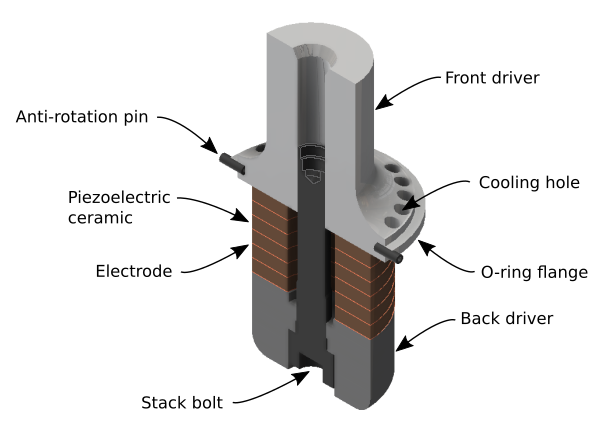
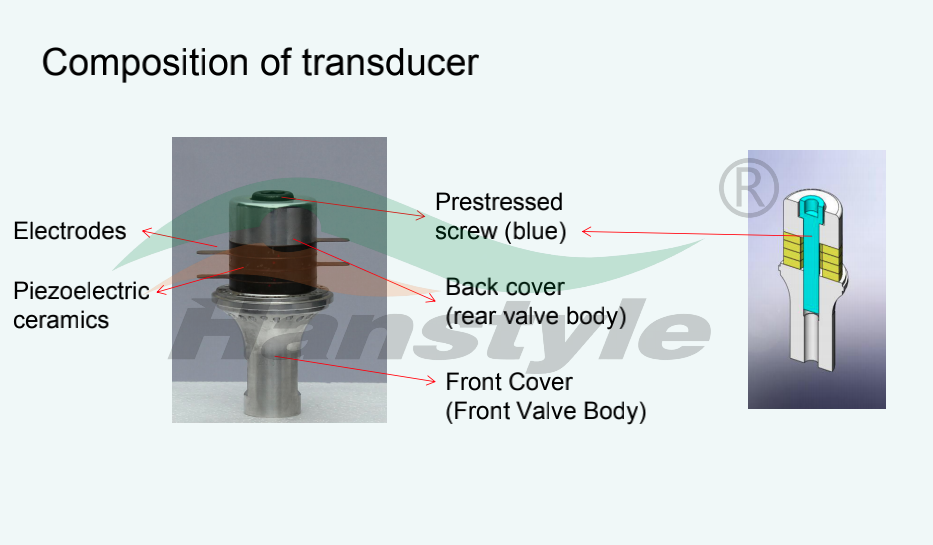
The manufacturing process for ultrasonic transducers involves the meticulous assembly of piezoelectric ceramics known for their remarkable electric charge generation capabilities under mechanical stress. According to studies in ultrasonic engineering, the process starts with selecting high-grade materials, often imported, which are then processed using precision machining techniques. The ceramic elements are crafted to exact dimensions to ensure the integrity of frequency and power output. Research highlights the importance of aging these components before assembly, allowing them to reach optimal performance levels. The housing is constructed from either aluminum or titanium, chosen for their ability to sustain the mechanical rigors of ultrasonic vibrations. The final assembly undergoes rigorous testing to guarantee frequency stability and output amplitude. Quality control measures are aligned with international standards, ensuring each transducer's reliability and longevity.
Product Application Scenarios
Ultrasonic transducers are commonly employed in scenarios requiring precision and efficiency. According to authoritative sources on industrial applications, these devices are integral to ultrasonic welding, offering clean and robust joints in plastics and metals without the need for consumables. Moreover, in ultrasonic cleaning, transducers facilitate the creation of cavitation bubbles that provide thorough cleaning for both delicate instruments and heavy-duty parts. The manufacturing sector values their use in non-destructive testing, detecting faults within materials without damage. Additionally, their therapeutic applications in medicine, though less common at 20kHz, demonstrate versatility by promoting tissue healing with precise energy delivery. Such wide-ranging applications underline their importance in both traditional and cutting-edge industries.
Product After-Sales Service
Our after-sales service includes a comprehensive warranty, technical support, and replacement policies to ensure customer satisfaction. We provide detailed user manuals and offer installation guidance. A dedicated support team is available for troubleshooting and addressing any specific concerns.
Product Transportation
The product is securely packaged in standard export packaging to ensure safe delivery. We offer worldwide shipping, with options for expedited delivery depending on your location and requirements.
Product Advantages
- Cost-efficient wholesale pricing
- Stable and high output power
- Durable construction materials
- Comprehensive testing ensures reliability
- Broad applications across industries
Product FAQ
- What materials are used in the transducer construction? The transducer housing is made from either titanium or aluminum to ensure durability and high performance.
- How stable is the frequency output? The transducer maintains a stable frequency output due to the high-quality piezoelectric ceramics employed.
Product Hot Topics
- How does ultrasonic transducer efficiency compare to traditional methods? The 20kHz ultrasonic transducer offers significantly improved efficiency over traditional mechanical methods. Its ability to convert electrical energy into mechanical vibrations with minimal loss makes it a valuable asset across industries seeking precision and speed.
Image Description