
Wholesale Probe Sonicator for Nanoparticle Applications
Product Main Parameters
| Model | Frequency | Power | Voltage | Pressure | Sound Intensity | Probe Material |
|---|---|---|---|---|---|---|
| H-UH20-1000S | 20KHz | 1000W | 220V | Normal | >10 W/cm² | Titanium Alloy |
| H-UH20-1000 | 20KHz | 1000W | 220V | Normal | >10 W/cm² | Titanium Alloy |
| H-UH20-2000 | 20KHz | 2000W | 220V | 35 MPa | >40 W/cm² | Titanium Alloy |
| H-UH20-3000 | 20KHz | 3000W | 220V | 35 MPa | >60 W/cm² | Titanium Alloy |
| H-UH20-3000Z | 20KHz | 3000W | 220V | 35 MPa | >60 W/cm² | Titanium Alloy |
Common Product Specifications
| Feature | Description |
|---|---|
| Generator Type | Digital type with automatic frequency searching and tracking |
| Power Setting Range | 1% to 99% |
| Reactor Material | High-quality glass, 304SS, 316L SS |
| Customization | Available for laboratory and industrial applications |
Product Manufacturing Process
The manufacturing of our probe sonicators involves precise engineering and stringent quality control measures to ensure optimal performance and reliability. Titanium alloys are carefully selected and processed to form the ultrasonic probe, which is the core component responsible for transmitting ultrasonic waves. These probes are designed to withstand demanding conditions and deliver consistent results across various applications. Our digital ultrasonic generators undergo rigorous testing to guarantee stable frequency output and adaptability to different operational conditions. This meticulous approach to manufacturing ensures that each probe sonicator meets industry standards and exceeds customer expectations.
Product Application Scenarios
Probe sonicators are versatile instruments with applications across numerous industries. In biotechnology, they are essential for cell disruption and lysing, aiding in processes like DNA extraction and protein isolation. In the food and pharmaceutical sectors, these devices play a critical role in emulsification and homogenization, ensuring consistent textures in products. Moreover, probe sonicators facilitate the synthesis of nanoparticles in materials science, making them valuable in research and development settings. As the demand for nano-sized materials grows, the need for effective ultrasonication techniques becomes increasingly important, highlighting the significance of our robust sonicator solutions.
Product After-Sales Service
- Comprehensive technical support and consultation
- Warranty service covering defects and malfunctions
- Regular maintenance and service options
Product Transportation
Our probe sonicators are securely packaged for transit to prevent damage during delivery. We offer shipping services via reputed carriers to ensure timely and safe delivery of products to our customers worldwide. For large orders, we can arrange for special logistical solutions to meet specific transportation needs.
Product Advantages
- High efficiency and versatility across various applications
- Robust construction with durable materials
- Available in multiple sizes for scalability
Product FAQ
- What industries can benefit from using a probe sonicator? Probe sonicators are valuable in industries such as biotechnology, pharmaceuticals, food processing, and materials science. They are used for cell disruption, homogenization of emulsions, and nanoparticle synthesis, among other applications.
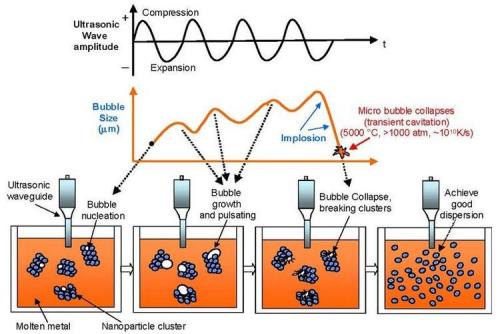
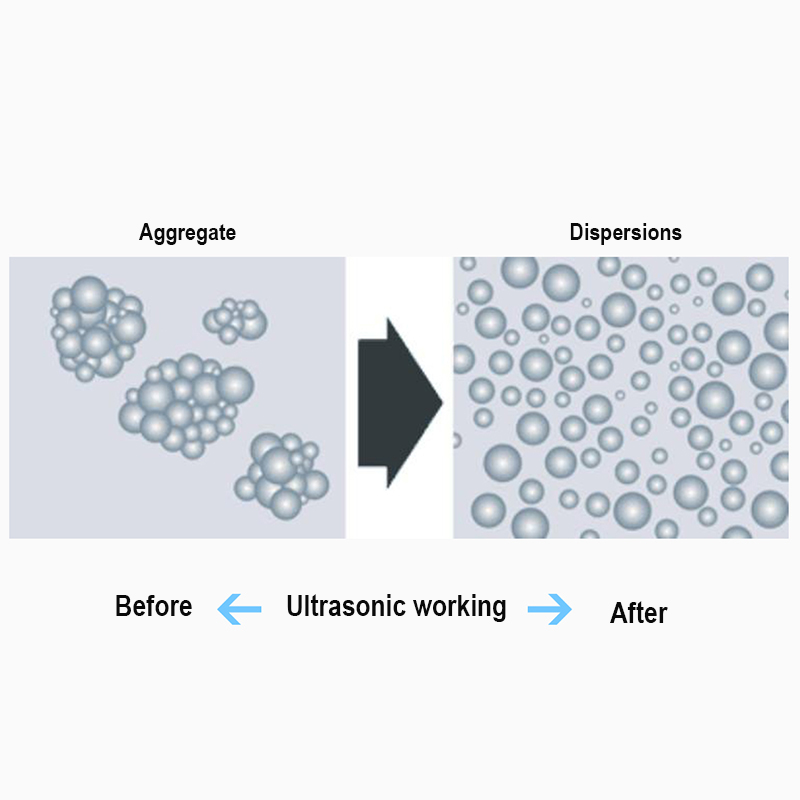
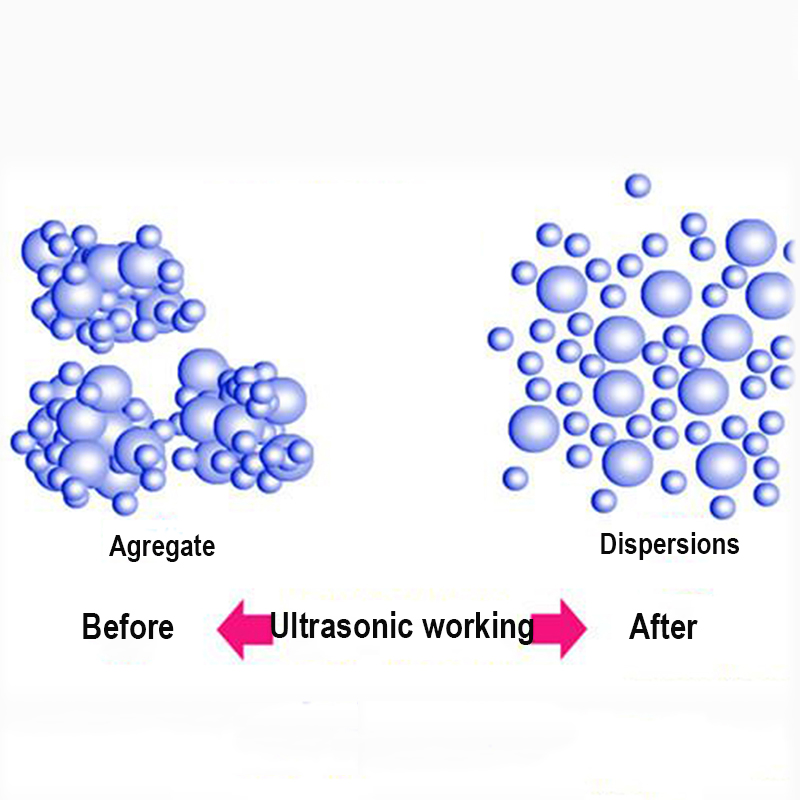
- How does ultrasonication improve emulsification processes? Ultrasonication uses high-frequency sound waves to create cavitation, which generates microbubbles in the liquid. These bubbles collapse and produce shock waves that mix immiscible liquids, resulting in stable emulsions and dispersions.
- Can the probe sonicator handle heat-sensitive samples? Yes, our probe sonicators are designed with cooling mechanisms to protect heat-sensitive samples from excessive temperature rises during ultrasonication.
- What materials are used in the construction of the probe? Our probes are made from high-quality titanium alloys, ensuring durability and effective performance across various applications.
- Is customization available for specific needs? Yes, we offer customization options for both laboratory and industrial applications to meet specific customer requirements.
- How scalable are your probe sonicators? Our sonicators are available in various sizes and power specifications, making them suitable for small-scale laboratory usage to large-scale industrial applications.
- What maintenance is required for the probe sonicator? Regular maintenance includes cleaning the probe after use, inspecting electrical connections, and periodic calibration checks to ensure optimal performance.
- What safety measures should be taken during operation? Operators should wear protective gear such as gloves and eye protection when handling the sonicator. Ensure that the equipment is properly grounded and that there are no exposed electrical connections.
- How is the probe sonicator shipped? Our probe sonicators are packaged securely to prevent damage during transport. We offer reliable shipping options through trusted logistics partners.
- What is the warranty period for the probe sonicator? We offer a standard warranty period covering defects and malfunctions. Extended warranty options are available for added peace of mind.
Product Hot Topics
- Probe sonicator and its role in nanoparticle synthesis Probe sonicators have become indispensable tools in nanoparticle synthesis due to their ability to generate high-energy environments. This facilitates the breaking down of materials to nanoscale, crucial in industries such as electronics, pharmaceuticals, and materials science. With the increasing demand for nano-sized materials, sonicators provide a reliable solution for achieving consistent particle sizes and improving material properties.
- How probe sonicators enhance chemical reaction rates Sonochemistry leverages the power of sonication to accelerate chemical reactions. The cavitation effect produced by sonicators generates localized high temperatures and pressures, which can increase reaction rates and yields. This makes probe sonicators valuable in organic synthesis and catalysis, helping chemists achieve their desired outcomes more efficiently.
- The significance of probe sonicators in the food industry In the food industry, probe sonicators are used to homogenize and emulsify products such as sauces, creams, and dressings. By ensuring a uniform texture and consistency, sonicators improve the quality and shelf-life of food products. Their application extends to the deodorization of fats and oils, making them a versatile tool in food processing.
- Exploring the benefits of ultrasonic cleaning with probe sonicators Probe sonicators are also effective in ultrasonic cleaning applications. They remove contaminants from delicate surfaces, such as laboratory glassware and precision instruments, without damaging them. This method of cleaning is preferred in industries where maintaining cleanliness and minimizing contamination are critical.
- Why the medical industry relies on probe sonicators In the medical field, probe sonicators facilitate cell lysis and isolation, aiding in research and diagnostic applications. Their ability to disrupt cells and tissue allows researchers to extract valuable biological materials like DNA and proteins efficiently. This capability is crucial in developing new medical treatments and understanding complex biological processes.
- Understanding the principles of cavitation in ultrasonication Cavitation is a key principle in ultrasonication, where the formation and collapse of bubbles generate shock waves that achieve mixing and disruption. Probe sonicators exploit this principle to perform a range of tasks from cell disruption to enhancing chemical reactions. Understanding cavitation helps users optimize the performance of their sonication processes.
- The role of probe sonicators in environmental applications Probe sonicators are valuable in environmental applications, such as pollutant degradation and wastewater treatment. Their ability to decompose complex pollutants into simpler forms enhances the efficiency of treatment processes. As environmental concerns grow, the application of sonicators in sustainable practices becomes increasingly significant.
- Case studies: Successful applications of probe sonicators Numerous case studies highlight the successful application of probe sonicators in various industries. From enhancing drug delivery systems to improving the quality of consumer products, these studies demonstrate the versatility and effectiveness of sonicators in achieving desired outcomes and solving complex challenges.
- The evolution of probe sonicator technology The development of probe sonicator technology has led to more efficient and user-friendly devices. Innovations such as automatic frequency adjustment and intelligent power control have improved the ease of use and adaptability of sonicators across different applications. This evolution continues to drive advancements in ultrasonic processing.
- The future of ultrasonication in industrial applications As industries continue to innovate and seek efficient processing solutions, the role of ultrasonication becomes more prominent. Probe sonicators are positioned to play a critical role in future industrial applications, particularly in nanotechnology and sustainable practices, delivering performance enhancements and promoting cleaner production methods.
Image Description