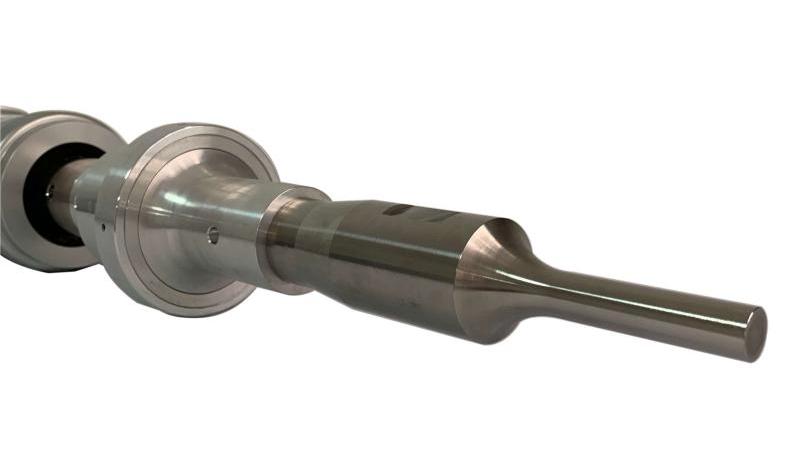

Wholesale High-Efficiency Homogenizer Probe
Product Main Parameters
| Model | Frequency | Power | Voltage | Material of Probe |
|---|---|---|---|---|
| H-UH20-1000S | 20KHz | 1000 W | 220V | Titanium Alloy |
| H-UH20-1000 | 20KHz | 1000 W | 220V | Titanium Alloy |
| H-UH20-2000 | 20KHz | 2000 W | 220V | Titanium Alloy |
| H-UH20-3000 | 20KHz | 3000 W | 220V | Titanium Alloy |
| H-UH20-3000Z | 20KHz | 3000 W | 220V | Titanium Alloy |
Product Manufacturing Process
The manufacturing process of the homogenizer probe involves precision engineering to ensure the integrity and performance of the device. The probe, often made from titanium alloy due to its durability and resistance to corrosion, is fabricated through a series of processes including machining, forming, and assembly. Ultrasonic welding is employed to connect components without compromising the material's properties. Quality control is stringent, with each probe undergoing rigorous testing to ensure it meets performance specifications. Studies suggest that ultrasonic homogenizers enhance extraction efficiency and reduce time, providing economic benefits in commercial settings.
Product Application Scenarios
Homogenizer probes are widely used in laboratories for various applications across multiple industries. In the pharmaceutical sector, they ensure even dispersion of APIs in formulations, which is critical for drug efficacy. In the food industry, they help maintain texture and consistency by emulsifying fats and oils. Additionally, they are used in chemical processing for nanoparticle dispersion and reaction acceleration. Research indicates that ultrasonic homogenizers' ability to disrupt cell membranes and break down particle agglomerates make them invaluable tools in biotechnology for cell lysing and enzyme extraction processes.
Product After-Sales Service
Our comprehensive after-sales service ensures customer satisfaction with top-tier support. We offer technical assistance for troubleshooting, routine maintenance, and repair services. Our team is available 24/7 to provide guidance and support for optimal device operation. Additionally, we provide a training program for users to understand the functionality and maintenance of their homogenizer probe, ensuring longevity and efficiency of the equipment.
Product Transportation
We provide global shipping solutions to ensure prompt and secure delivery of your homogenizer probe. Our packaging is designed to protect the equipment from damage during transit, with guidelines for proper unpacking and installation. We offer logistic tracking services for real-time updates on your shipment's status, ensuring transparency and reliability from our warehouse to your designated delivery address.
Product Advantages
- Increased extraction rates and reduced processing time
- No heat required, suitable for heat-sensitive substances
- Reduced energy consumption and lower operation costs
- Suitable for large-scale industrial production
- Enhanced stability in liquid-solid and liquid-liquid mixtures
Product FAQ
- What is a homogenizer probe?
A homogenizer probe is a device used to mix, emulsify, or dissolve particles evenly in various applications, including pharmaceuticals and food processing.
- Why choose a wholesale purchase for homogenizer probes?
Wholesale purchases offer cost savings and ensure a consistent supply for large-scale operations, essential for industrial applications.
- How does the homogenizer probe use ultrasonic technology?
The probe utilizes ultrasonic cavitation, creating powerful shearing forces that break down particles, ensuring homogeneity and stability in mixtures.
- Are homogenizer probes suitable for heat-sensitive samples?
Yes, ultrasonic homogenizers operate without heat, making them ideal for heat-sensitive samples like biological specimens or delicate pharmaceuticals.
- What is the advantage of a titanium alloy probe?
Titanium alloy is corrosion-resistant and durable, providing longevity and reliability under high-stress, high-frequency ultrasonic conditions.
- Can homogenizer probes handle large sample volumes?
While excellent for small to medium volumes, efficiency may reduce with large volumes; consider scaling up with multiple units or larger models.
- How should the homogenizer probe be maintained?
Regular cleaning and calibration ensure optimal performance and prevent cross-contamination, vital for maintaining high standards in laboratories.
- What industries commonly use homogenizer probes?
They're widely used in pharmaceuticals, food processing, chemical manufacturing, and biotechnology for their precision in sample preparation.
- What are the shipping options for wholesale homogenizer probes?
We offer various shipping methods, including air and sea freight, ensuring safe and timely delivery worldwide with tracking available.
- How does the homogenizer probe improve economic efficiency?
It reduces processing times and energy consumption, offering cost-effective solutions for high-quality production processes.
Product Hot Topics
- Advantages of Ultrasonic Homogenizer Probes
Ultrasonic homogenizer probes have revolutionized sample preparation by providing quick and efficient homogenization. Their ability to handle various sample types with variable viscosities makes them indispensable in research and industrial applications. The technology behind ultrasonic cavitation allows for precise control of the homogenization process, ensuring consistent, reliable results that meet the demands of modern laboratories.
- Understanding the Cavitation Process in Homogenizers
The cavitation process is central to the operation of ultrasonic homogenizers. It involves the formation and rapid collapse of bubbles in a liquid medium, which generates intense shear forces. These forces break down particles and agglomerates effectively, resulting in a homogenized solution. This phenomenon accelerates chemical reactions and enhances the extraction of valuable components, demonstrating the vast potential of ultrasonic technology.
- Wholesale Benefits for Laboratory Equipment
Purchasing laboratory equipment wholesale offers multiple advantages, such as reduced costs and guaranteed availability. For businesses dealing with high-volume production, wholesale options can streamline procurement processes and ensure that all equipment meets industry standards. Reliable suppliers can also provide consistent support and maintenance services, which are particularly beneficial for large-scale operations.
- Homogenizers in Pharmaceutical Research
In pharmaceutical research, homogenizers play a crucial role in drug formulation and development. They ensure the even distribution of active ingredients, which is vital for the efficacy and safety of pharmaceuticals. Researchers rely on the precision and reliability of ultrasonic homogenizers to maintain the integrity of their formulations, making them a critical component in drug development workflows.
- Challenges and Solutions in Industrial Homogenization
Industrial homogenization presents unique challenges such as handling large volumes and diverse material properties. Ultrasonic homogenizers offer a solution by providing scalable options that can be adapted to different applications. The ability to modify frequencies and probe sizes allows for customization, ensuring that industrial processes meet quality and efficiency standards without compromising output.
- Maintaining Quality through Regular Equipment Maintenance
Regular maintenance of laboratory equipment like homogenizer probes is essential for sustaining high performance. Preventative maintenance, including cleaning and calibration, helps avoid cross-contamination and ensures consistent results. Establishing a routine maintenance schedule can extend the lifespan of equipment, maximizing return on investment and maintaining high laboratory standards.
- The Role of Homogenizers in Food Production
In food production, homogenizers are essential for creating emulsions and blending ingredients to improve texture and flavor. They enable the uniform distribution of fats and oils in products, which enhances product stability and shelf life. The versatility of ultrasonic homogenizers makes them valuable tools in developing innovative food products that meet consumer expectations.
- Emerging Trends in Homogenization Technology
Technological advancements in homogenization are paving the way for more efficient and environmentally friendly processes. Innovations like digital controls and automation have enhanced the precision and repeatability of homogenizers. Additionally, research into new materials and probe designs continues to improve the performance and durability of these devices, supporting their evolution in various industries.
- Comparing Homogenizer Types for Optimal Applications
Choosing the right type of homogenizer is crucial for achieving desired outcomes in laboratory and industrial settings. While rotor-stator homogenizers offer mechanical shearing, ultrasonic homogenizers provide non-thermal, high-efficiency processing. Understanding the specific needs of your application, such as sample size and sensitivity, will help determine the most suitable homogenizer type for precise and effective results.
- Economic Impacts of Efficient Homogenization
Efficient homogenization can lead to significant cost savings in production and research environments. By reducing processing times and energy consumption, ultrasonic homogenizers offer a more sustainable option. These economic benefits, combined with the ability to maintain consistent quality, reinforce the value of investing in advanced homogenization technology for long-term financial success.
Image Description