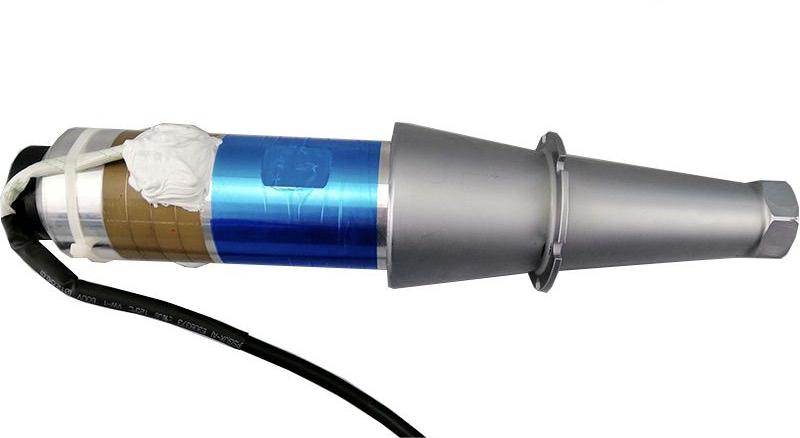

Top Manufacturer of 15KHz Ultrasonic Sensor
Product Main Parameters
| Item NO. | Frequency (KHz) | Dimensions | Impedance | Capacitance (pF) | Input Power (W) | Max Amplitude (um) | Shape | Ceramic Diameter (mm) | Qty of Ceramic | Connect Screw |
|---|---|---|---|---|---|---|---|---|---|---|
| H-7015-4Z | 15 | Cylindrical | 70 | 4 | M20×1.5 | 12000-14000 / 17000-19000 | 2600 | 10 | ||
| H-6015-4Z | 15 | 60 | 4 | M16×1 | 8000-10000 10000-11000 12500-13500 | 2200 | 10 | |||
| H-6015-6Z | 15 | 60 | 6 | M20×1.5 | 18500-20500 / / | 2600 | 10 |
Common Product Specifications
| Type | Application | Material | Environment |
|---|---|---|---|
| Proximity Sensors | Detection of objects in range | Piezoelectric ceramics | Industrial, Automotive |
| Distance Measurement Sensors | Distance measurement, Obstacle detection | Piezoelectric ceramics | Robotics, Industrial |
Product Manufacturing Process
The manufacturing of ultrasonic transducers involves precise fabrication and assembly of piezoelectric ceramics and components. A high degree of quality control is maintained throughout the process to ensure each unit meets rigorous standards for performance and reliability. This involves the selection of high-grade materials, careful assembly to ensure proper alignment and contact, and thorough testing of each unit. Modern techniques such as computer-aided design and automated production lines are employed to enhance precision and efficiency. The process culminates in a series of tests to verify the acoustic properties, mechanical integrity, and electrical efficiency of the transducers. According to authoritative papers, this meticulous manufacturing process is crucial to achieving high conversion efficiency and reliability in sonic applications.
Product Application Scenarios
Ultrasonic transducers have diverse applications across multiple industries due to their precise and non-contact measurement capabilities. According to studies, they are instrumental in automotive systems for parking assistance, in robotics for navigation and mapping, and in industrial settings for level measurement and object detection. The healthcare industry also benefits from ultrasonic technology in diagnostic and monitoring devices. The versatility of these sensors allows for extensive usage, from consumer electronics to military applications. Their ability to function in various environmental conditions while maintaining accuracy and reliability underpins their growing adoption as noted in recent industry research.
Product After-Sales Service
We offer comprehensive after-sales support, including a warranty period for replacements or repairs, technical assistance for installation and usage, and access to a dedicated support team for troubleshooting and queries. Our commitment to customer satisfaction ensures prompt and efficient service.
Product Transportation
The product is packaged with robust materials to ensure safe transportation. We offer various shipping options to meet client needs, with delivery ports located at major logistics hubs for timely distribution.
Product Advantages
- Energy-saving and environment-friendly design
- Stringent quality control with multiple testing phases
- High mechanical quality factor for superior performance
- Enhanced welding strength, ideal for automated production
- Competitive pricing with superior value
Product FAQ
- What is the primary function of the ultrasonic sensor? The manufacturer designs the ultrasonic sensor to convert electrical signals into acoustic waves and vice versa for various applications.
- How does temperature affect ultrasonic sensors? The performance can vary with temperature changes as they influence the speed of sound, but the manufacturer ensures calibration for consistent results.
- Can the ultrasonic sensor detect transparent objects? Yes, as the sensor uses sound waves, not light, the manufacturer designs them to detect most objects regardless of transparency.
- What is the typical range of an ultrasonic sensor? The manufacturer specifies most sensors measuring distances from a few centimeters up to several meters, depending on the model.
- Are ultrasonic sensors safe for use in medical equipment? Yes, the manufacturer ensures they meet safety standards for non-invasive applications.
- How does the manufacturer ensure product quality? Through rigorous testing and quality assurance processes, each ultrasonic sensor meets high-quality standards before shipping.
- What are the application limitations of the ultrasonic sensor? They may struggle with soft, sound-absorbing materials, but the manufacturer provides solutions for typical applications.
- Is there a warranty for the ultrasonic sensor? Yes, the manufacturer offers a warranty covering defects and performance issues as per their terms.
- Can the ultrasonic sensor be used in harsh environments? The manufacturer designs robust models suitable for challenging industrial conditions.
- Does the manufacturer provide customization options? Yes, the ultrasonic sensor can be tailored to specific application needs upon request.
Product Hot Topics
- Efficiency in Manufacturing with Ultrasonic Sensors The role of ultrasonic sensors in modern manufacturing revolves around efficiency and precision. Leading manufacturers incorporate these sensors to streamline operations, enhance quality control, and reduce waste—increasing overall productivity.
- The Evolution of Ultrasonic Sensors in Automotive Industry As a manufacturer, the integration of ultrasonic sensors in vehicles has significantly advanced safety features such as parking assistance and collision avoidance, marking a new era in automotive technology.
- Key Considerations for Choosing the Right Ultrasonic Sensor When selecting an ultrasonic sensor, manufacturers should consider factors like range, environment, and application to ensure compatibility and optimal performance.
- Advancements in Ultrasonic Sensor Technology Recent developments by manufacturers have improved sensor sensitivity, range, and functionality, allowing for broader application in diverse industries.
- The Impact of Ultrasonic Sensors on Robotics The introduction of ultrasonic sensors by manufacturers into robotics has transformed navigation and obstacle detection, enabling more efficient and autonomous robotic systems.
- Comparing Ultrasonic Sensors to Optical Sensors While both sensors serve similar purposes, ultrasonic manufacturer's sensors offer advantages in conditions where optical sensors may falter, such as in dusty or dark environments.
- Customization in Ultrasonic Sensor Solutions Manufacturers are increasingly providing bespoke ultrasonic sensor solutions, enabling customers to meet specific operational needs and challenges more effectively.
- The Role of Ultrasonic Sensors in Industrial Automation Ultrasonic sensors by manufacturers play a critical role in automation, providing real-time feedback for process control and optimization in various industrial applications.
- Environmental Benefits of Using Ultrasonic Sensors Compared to other sensor technologies, ultrasonic sensors manufactured are eco-friendly, reducing energy consumption and waste across applications.
- Innovations in Sensor Technology Leading manufacturers continue to innovate in ultrasonic sensor technology, focusing on miniaturization and increased functionality to meet the growing demands of modern applications.
Image Description