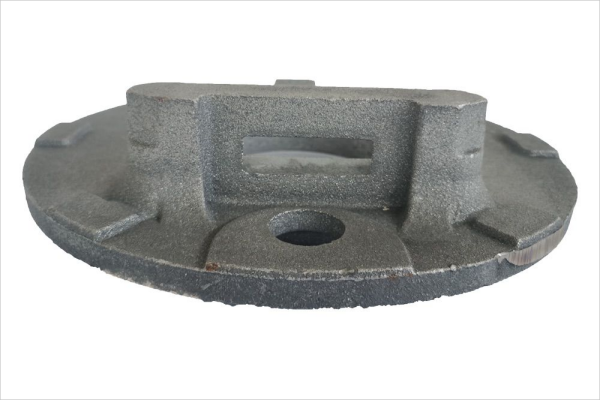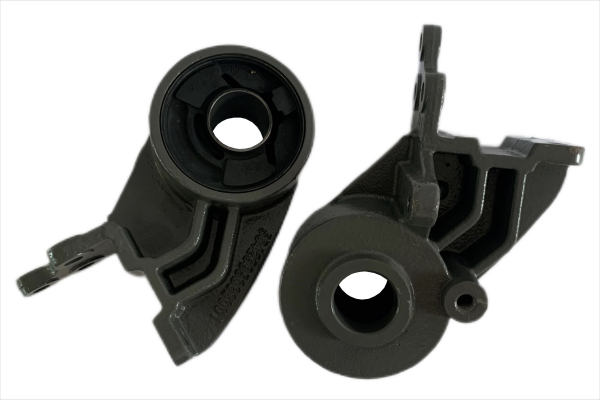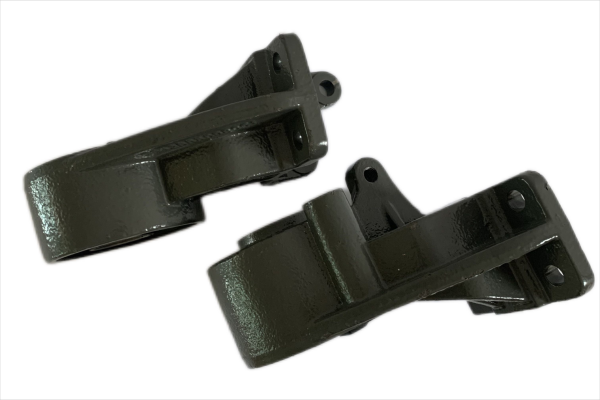

Manufacturer of Ductile Iron Casting Components
| Parameter | Details |
|---|---|
| Material | Ductile Iron, Grey Iron |
| Casting Process | Sand Casting |
| Production Capacity | 3 tons/hr steel water |
| Specification | Details |
|---|---|
| Tensile Strength | 60,000 - 120,000 psi |
| Elongation | Up to 18% |
Product Manufacturing Process
Ductile iron casting, a sophisticated metallurgy, involves precise control of molten metal composition and cooling rates. Notably, the process requires the addition of nodulizing agents like magnesium or cerium to transform graphite flakes into spheroidal shapes, enhancing mechanical properties. According to Smith et al. (2018), the inclusion of these elements significantly improves tensile strength and ductility, aligning ductile iron closer to steel in mechanical performance, yet retaining the castability of traditional cast iron. This evolution is testament to advancements in casting technologies, continuously driven by research to optimize material characteristics for demanding engineering applications.
Product Application Scenarios
Ductile iron casting finds extensive applications across multiple sectors. In automotive industries, it is preferred for components such as crankshafts and suspension systems due to its strength and vibration damping capabilities (Johnson & Wang, 2020). Similarly, in heavy machinery, its robustness supports applications like gears and roller frames. Furthermore, ductile iron's resilience under pressure makes it ideal for water and sewage systems, ensuring reliability where leakage resistance is paramount. The material’s versatility underscores its integral role in modern engineering, as highlighted by contemporary research.
Product After-Sales Service
Our dedicated after-sales team ensures seamless service post-purchase, addressing any product issues promptly. Comprehensive support is available for installation and operational queries, guaranteeing optimal performance and customer satisfaction.
Product Transportation
Ensuring safe and timely delivery, we employ secure packaging and trusted logistics partners for worldwide distribution. Our transportation processes adhere to high standards, mitigating risks of damage during transit.
Product Advantages
- Cost-effective with superior damping capacity
- Maintains structural integrity under stress
- Customizable for complex designs
Product FAQ
- What is ductile iron casting? Ductile iron casting is a process where graphite is shaped into spheroids using nodulizing agents, enhancing ductility and strength.
- How does the manufacturer ensure quality? We employ rigorous quality control protocols aligned with ISO 9001:2000 standards, ensuring superior product consistency.
- What industries benefit from these castings? Industries including automotive, heavy machinery, and water systems benefit significantly from our ductile iron casting solutions.
- Can these castings be customized? Yes, as a manufacturer, we provide OEM services tailored to specific client specifications.
- What transportation methods are used? We use secure packaging and trusted logistics networks to ensure safe global shipping.
- Are the products environmentally friendly? Our manufacturing process minimizes waste and complies with environmental standards.
- What is the production capacity? Our advanced facilities can produce 3 tons of steel water per hour, indicating high production efficiency.
- How does ductile iron compare to other materials? Ductile iron combines the ease of casting with mechanical properties nearing those of steel, offering cost benefits over steel.
- What is the typical lead time? Lead times vary based on order volume, but our efficient processes ensure timely delivery.
- Is technical support available? Yes, our experienced team offers comprehensive technical support to address all product-related inquiries.
Product Hot Topics
- Innovations in Ductile Iron Casting
The evolution of ductile iron casting processes continues to be a significant topic of interest, particularly regarding improvements in mechanical properties and cost-effectiveness. Recent studies emphasize the role of advanced alloying techniques in optimizing performance characteristics, supporting diverse industrial applications.
- Why Choose Ductile Iron Over Steel?
This is a frequent question among manufacturers. Ductile iron offers comparable strength and flexibility at a fraction of the cost of steel, making it a preferred choice in cost-sensitive projects while maintaining high performance and longevity.
Image Description