
Leading Manufacturer of High-Efficiency Emulsifying Mixer
Product Main Parameters
| Model | Frequency | Power | Voltage | Pressure | Intensity of Sound | Material of Probe | Generator |
|---|---|---|---|---|---|---|---|
| H-UH20-1000S | 20KHz | 1000 W | 220V | Normal | >10 W/cm² | Titanium Alloy | Digital type |
| H-UH20-1000 | 20KHz | 1000 W | 220V | Normal | >10 W/cm² | Titanium Alloy | Digital type |
| H-UH20-2000 | 20KHz | 2000W | 220V | 35 MPa | >40 W/cm² | Titanium Alloy | Digital type |
| H-UH20-3000 | 20KHz | 3000W | 220V | 35 MPa | >60 W/cm² | Titanium Alloy | Digital type |
| H-UH20-3000Z | 20KHz | 3000W | 220V | 35 MPa | >60 W/cm² | Titanium Alloy | Digital type |
Common Product Specifications
| Aspect | Specification |
|---|---|
| Probe Material | Titanium Alloy |
| Frequency | 20KHz |
| Power Range | 1000W - 3000W |
| Sound Intensity | >10 W/cm² - >60 W/cm² |
| Voltage | 220V |
| Pressure Options | Normal - 35 MPa |
| Generator Type | Digital |
Product Manufacturing Process
The manufacturing process of emulsifying mixers involves precision engineering to ensure high performance and durability. The core components, such as the rotor and stator, are crafted using high-grade materials like titanium alloy for the probes, offering enhanced strength and longevity. The assembly process incorporates advanced welding and machining techniques to maintain tight tolerances and ensure consistent output quality. During production, each mixer undergoes rigorous quality control checks including frequency and power calibration, pressure testing, and sound intensity validation. The use of digital technology for generator integration allows for automatic frequency searching and tracking, optimizing operational efficiency. These manufacturing practices ensure that each mixer delivers superior emulsification, essential for various industrial applications.
Product Application Scenarios
Emulsifying mixers play a crucial role in diverse industries such as pharmaceuticals, cosmetics, food and beverages, and chemicals. In the pharmaceutical sector, they are used to create homogenous mixtures for creams, lotions, and medicinal suspensions, ensuring efficacy and stability. In cosmetics, emulsifying mixers are key to formulating smooth and consistent skincare and haircare products. The food and beverage industry relies on these mixers to produce stable emulsions in products like dressings, sauces, and dairy items, enhancing texture and taste. The chemical industry utilizes emulsifying mixers for creating paints, lubricants, and pesticides, where the uniform dispersion of components is critical. The versatility and adaptability of emulsifying mixers make them indispensable across these varied applications.
Product After-Sales Service
- 24/7 customer support for technical assistance and troubleshooting.
- Comprehensive warranty coverage for parts and labor.
- Regular maintenance and calibration services available.
- Access to a dedicated service center for quick repairs.
- Online resources and tutorials for user guidance.
Product Transportation
- Robust packaging to protect against damage during transit.
- Worldwide shipping options with tracking information.
- Collaborations with reliable logistics partners to ensure timely delivery.
- Customs clearance support for international shipments.
- Insurance options available for added security.
Product Advantages
- Titanium alloy material for enhanced durability and safety in all industries.
- Wide range of power and pressure options for versatile application.
- Digital generators for automatic frequency searching and stable output.
- Customizable probe sizes and shapes to meet specific requirements.
- Efficient performance with automatic alarm protection and easy operation.
Product FAQ
- What industries can benefit from using emulsifying mixers?
Emulsifying mixers are beneficial in pharmaceuticals, cosmetics, food and beverages, and chemicals industries. They help create stable emulsions for products like creams, lotions, sauces, and paints, enhancing product quality and consistency. - How does the ultrasonic emulsifying mixer differ from traditional mixers?
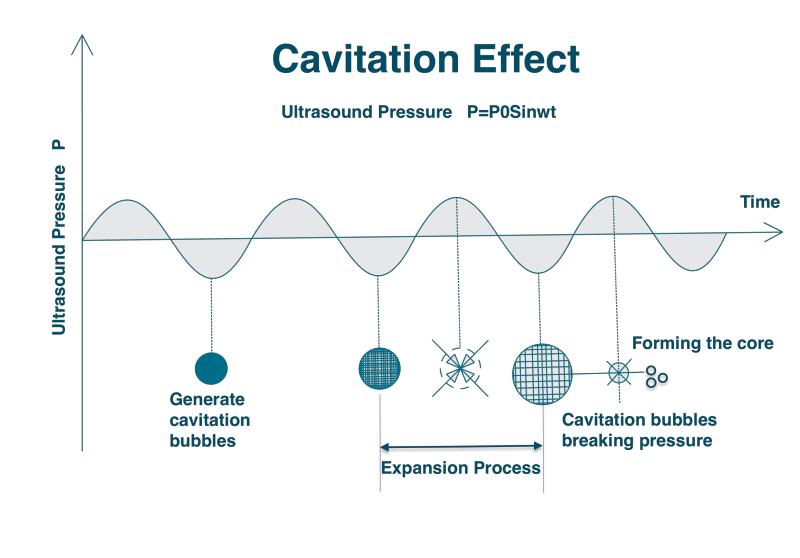
Ultrasonic emulsifying mixers utilize sound waves to create cavitation, promoting finer emulsification compared to traditional high-shear or colloid mills, which rely on mechanical forces alone. - Is it possible to customize the mixer for specific applications?
Yes, as a manufacturer, we offer customization options for probe size, shape, and generator settings to cater to unique application needs and material specifications. - How is the mixer maintained to ensure optimal performance?
Regular maintenance involves cleaning, calibrating frequency and power settings, and inspecting components for wear and tear to ensure prolonged operational efficiency and reliability. - Can the mixer handle high-viscosity materials?
Yes, our emulsifying mixers are designed to accommodate a wide range of viscosities, making them suitable for thick creams, lotions, and adhesive products. - What safety features are included in the mixer design?
The mixer includes automatic alarm protection to alert users of any operational anomalies and is built with durable materials like titanium alloy for safe use across industries. - Does the mixer come with a warranty?
Yes, all our emulsifying mixers are covered by a comprehensive warranty that includes parts and labor to guarantee user satisfaction and product reliability. - What makes the titanium alloy probe advantageous?
Titanium alloy probes offer superior strength, corrosion resistance, and biocompatibility, making them ideal for sensitive applications in pharmaceuticals and food processing. - How does the mixer enhance product quality?
By creating homogenous and stable emulsions, the mixer improves product texture, appearance, and performance, crucial for consumer satisfaction across various applications. - Are there energy-saving options available?
Yes, our mixers are designed for efficiency, offering power adjustability from 1% to 99% to optimize energy use while maintaining high performance.
Product Hot Topics
- Innovation in Emulsifying Mixers: Benefits for Manufacturers
As a manufacturer, staying at the forefront of emulsifying mixer technology provides a competitive edge. Advanced mixers offer improved efficiency, versatility, and product quality, vital for meeting industry demands and consumer expectations. Embracing innovations such as digital generators and customizable probes enhances operational capabilities, ensuring manufacturers can cater to diverse applications and material characteristics. - Choosing the Right Emulsifying Mixer for Your Industry
Selecting the appropriate emulsifying mixer requires understanding industry-specific needs and product formulations. Manufacturers must consider factors like viscosity, stability requirements, and desired particle size reduction. High-shear mixers, ultrasonic emulsifiers, and homogenizers each offer distinct advantages, and identifying the optimal solution ensures enhanced product quality and processing efficiency. - Environmental Impact of Modern Emulsifying Mixers
Today's manufacturers are increasingly focused on sustainability, and emulsifying mixers play a role in reducing environmental impact. Advancements in design and efficiency minimize energy consumption and waste generation. By choosing mixers with energy-saving features and durable materials, manufacturers can contribute to eco-friendly operations without compromising on performance or product quality. - Importance of Customization in Emulsifying Mixers
Customization options in emulsifying mixers offer manufacturers the flexibility to address specific application requirements, from probe size and shape to power settings. Tailoring mixers to suit unique process conditions and material properties enhances effectiveness, ensuring optimal emulsification and product consistency, and ultimately meeting specialized consumer demands. - Advancements in Ultrasonic Emulsifying Technologies
Ultrasonic technology revolutionizes emulsifying mixers by providing superior cavitation and shear forces, resulting in exceptionally fine emulsions. Manufacturers benefit from these advancements through improved processing speed, reduced energy consumption, and the ability to handle complex formulations, enhancing their capabilities across various industries. - Future Trends in the Emulsifying Mixer Market
The emulsifying mixer market is poised for significant growth driven by technological advancements and increasing demand for high-quality emulsions. Manufacturers are focusing on developing smart mixers with IoT integration, enabling remote monitoring and predictive maintenance. These innovations promise to enhance efficiency, reduce downtime, and optimize manufacturing processes. - Ensuring Mixer Longevity with Proper Maintenance
Proper maintenance is key to extending the life of emulsifying mixers and ensuring consistent performance. Manufacturers should implement regular cleaning, inspection, and calibration routines, along with timely repairs and component replacements. By adhering to maintenance best practices, manufacturers can maximize the return on investment and maintain high-quality output. - Impact of Emulsifying Mixers on Product Development
Emulsifying mixers are crucial in accelerating product development cycles by ensuring rapid formulation and testing of new emulsions. Manufacturers can leverage mixers' versatility to experiment with diverse ingredients and formulations, facilitating innovation and creating competitive products that meet evolving consumer preferences. - Comparing Emulsifying Mixer Technologies: Which Is Best?
Manufacturers must weigh the benefits of various emulsifying mixer technologies to determine the best fit for their needs. High-shear mixers offer speed, ultrasonic mixers provide precision, and homogenizers deliver pressure-induced particle reduction. Evaluating factors like efficiency, versatility, and ease of use guides manufacturers in making informed decisions. - The Role of Emulsifying Mixers in Quality Assurance
Emulsifying mixers are integral to quality assurance in industries where stable and consistent products are pivotal. Manufacturers rely on these mixers to ensure uniform ingredient dispersion, crucial for meeting regulatory standards and achieving consumer approval. By investing in advanced mixer technologies, manufacturers enhance their quality control processes, ensuring superior product outcomes.
Image Description