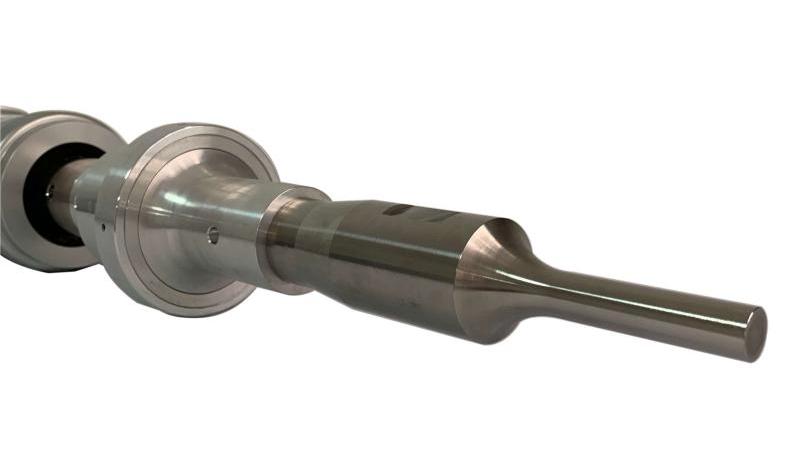

Factory Ultrasonic Homogenizing Equipment 20kHz
Product Main Parameters
| Model | Frequency | Power | Voltage | Pressure | Material of Probe | Generator |
|---|---|---|---|---|---|---|
| H-UH20-1000S | 20KHz | 1000 W | 220V | Normal | Titanium Alloy | Digital type |
| H-UH20-1000 | 20KHz | 1000 W | 220V | Normal | Titanium Alloy | Digital type |
| H-UH20-2000 | 20KHz | 2000 W | 220V | 35 MPa | Titanium Alloy | Digital type |
| H-UH20-3000 | 20KHz | 3000 W | 220V | 35 MPa | Titanium Alloy | Digital type |
| H-UH20-3000Z | 20KHz | 3000 W | 220V | 35 MPa | Titanium Alloy | Digital type |
Common Product Specifications
| Intensity of Sound | >10 W/cm² - >60 W/cm² |
|---|
Product Manufacturing Process
Ultrasonic homogenizing leverages high-frequency sound waves facilitated by an ultrasonic transducer, converting electrical energy into mechanical vibrations. The core of the manufacturing process involves precise engineering of the ultrasonic probe from high-grade titanium alloy, which ensures robust and durable performance. The process emulates those documented in authoritative scientific papers, which underline the significance of consistent frequency and power in ensuring thorough homogenization. Studies indicate that employing a frequency of 20 kHz optimizes cavitation, enhancing the efficacy of particle dispersion, emulsification, and cell disruption, confirming the equipment's industrial versatility and reliability.
Product Application Scenarios
Ultrasonic homogenizing is widely applied across numerous fields including biotechnology, pharmaceuticals, food processing, and materials science. In biotechnology, it facilitates the efficient extraction of DNA and proteins from cells, crucial for research and development. The pharmaceutical industry employs this technology to create stable emulsions that improve drug delivery and bioavailability. In food processing, ultrasonic homogenizing enhances product texture and stability, optimizing sensory attributes. Recent academic papers highlight the method's efficacy in promoting industrial innovation, underscoring its adaptability for both laboratory and large-scale production environments.
Product After-Sales Service
Our factory offers comprehensive after-sales service, including a one-year warranty, maintenance support, and technical assistance. Customers can reach our support team for troubleshooting and guidance on optimal equipment use to ensure enduring performance.
Product Transportation
Our ultrasonic homogenizing equipment is packaged securely for shipment, ensuring safe delivery to factories worldwide. We collaborate with reliable logistics partners to guarantee timely and efficient transportation, accommodating specific delivery requirements as needed.
Product Advantages
- Highly efficient particle and cell disruption through cavitation.
- Suitable for heat-sensitive materials due to no-heat processing.
- Cost-effective and scalable from lab to industrial use.
- Reduces the need for chemical additives in emulsification processes.
Product FAQ
- Q: What industries benefit from ultrasonic homogenizing?
A: Industries such as biotechnology, pharmaceuticals, and food processing benefit from ultrasonic homogenizing by achieving efficient emulsification, dispersal, and extraction without compromising material integrity. - Q: How does ultrasonic homogenizing improve product quality?
A: By decreasing particle size and enhancing uniformity, ultrasonic homogenizing refines texture and stability in food products and increases bioavailability in pharmaceutical compounds. - Q: Is ultrasonic homogenizing energy-efficient?
A: Yes, it is an energy-efficient technology that minimizes processing time and resource consumption compared to traditional homogenization methods. - Q: Can the process be applied to sensitive biological samples?
A: Absolutely, ultrasonic homogenizing is ideal for sensitive biological samples as it avoids heat-induced degradation, preserving molecular integrity. - Q: What maintenance is required for the equipment?
A: Routine maintenance includes cleaning the probe and checking equipment calibration to ensure optimal performance and longevity. - Q: Can the equipment be customized?
A: Yes, our factory offers customization options to meet specific industrial requirements, ensuring tailored ultrasonic homogenizing solutions. - Q: Is training available for first-time users?
A: We provide comprehensive training and user manuals to ensure that operators can efficiently manage the ultrasonic homogenizing equipment. - Q: How can overheating be prevented?
A: Integrated cooling systems and monitoring provide effective measures to prevent overheating during ultrasonic homogenizing. - Q: What are the safety measures associated with operation?
A: Safety measures include using protective gear and adhering to operating guidelines to prevent exposure to high-frequency sound and ensure safe operation. - Q: What is the typical lead time for orders?
A: Lead time varies based on order size and customization needs, but we strive to fulfill orders promptly to support uninterrupted factory operations.
Product Hot Topics
- Discussion on Ultrasonic Homogenizing Efficiency in the Factory: The integration of ultrasonic homogenizing equipment in industrial applications has revolutionized efficiency in factories worldwide. By leveraging the cavitation effect, factories can enhance the mixing and extraction processes, leading to higher productivity, reduced material waste, and improved product quality. This trend is evident in biotechnology and pharmaceuticals, where precision and integrity are paramount.
- Impact of Ultrasonic Homogenizing on Product Development: Ultrasonic homogenizing technology opens exciting avenues for product innovation. It allows factories to develop cutting-edge solutions with enhanced formulations, meeting consumer demands for high-quality and sustainable products. The versatility of this technology facilitates its deployment in various sectors, from cosmetics to nutraceuticals.
- Sustainability Benefits with Ultrasonic Homogenizing: As industries push towards greener operations, ultrasonic homogenizing plays a critical role in sustainable manufacturing. The technology's low energy consumption and minimization of chemical additives contribute to eco-friendly processes, aligning with global sustainability goals.
- Technological Advancements in Ultrasonic Homogenizing: Continuous technological enhancements in ultrasonic homogenizing are advancing its capabilities, offering new features such as automated monitoring and enhanced user interfaces. These advancements equip factories with the tools necessary to stay competitive in dynamic markets.
- Ultrasonic Homogenizing in Food Industry Innovations: In the food industry, ultrasonic homogenizing is driving innovations by improving product texture and stability. The ability to create smooth emulsions and dispersions without heat extends shelf life and enhances consumer appeal, positioning factories at the forefront of food technology.
- Challenges in Scaling Ultrasonic Homogenizing for Industrial Use: While ultrasonic homogenizing offers numerous benefits, scaling it for large-scale industrial application presents challenges. Factories must balance equipment investment with operational gains, ensuring the technology meets industrial demands effectively.
- Customization in Ultrasonic Homogenizing Equipment: Many factories require specialized ultrasonic homogenizing setups to address unique production needs. Customization options enable tailored solutions that optimize factory operations, ensuring alignment with specific manufacturing processes.
- Future Trends in Ultrasonic Homogenizing Technology: Looking ahead, factories can anticipate further innovations in ultrasonic homogenizing, driven by research and development. Emerging trends focus on enhanced precision, expanded application scopes, and integration with smart factory technologies.
- Cost-Benefit Analysis of Ultrasonic Homogenizing: Conducting a cost-benefit analysis highlights the advantages of adopting ultrasonic homogenizing in factory settings. Despite initial investment, the long-term benefits such as reduced operating costs and product quality improvements justify the transition.
- Regulatory Considerations for Ultrasonic Homogenizing in Factories: Factories implementing ultrasonic homogenizing must navigate regulatory frameworks to ensure compliance. Understanding and adhering to industry standards safeguard operations and consumer trust, with emphasis on quality and safety.
Image Description