Factory-Grade Ultrasonic Food Mixing Processor 20KHz
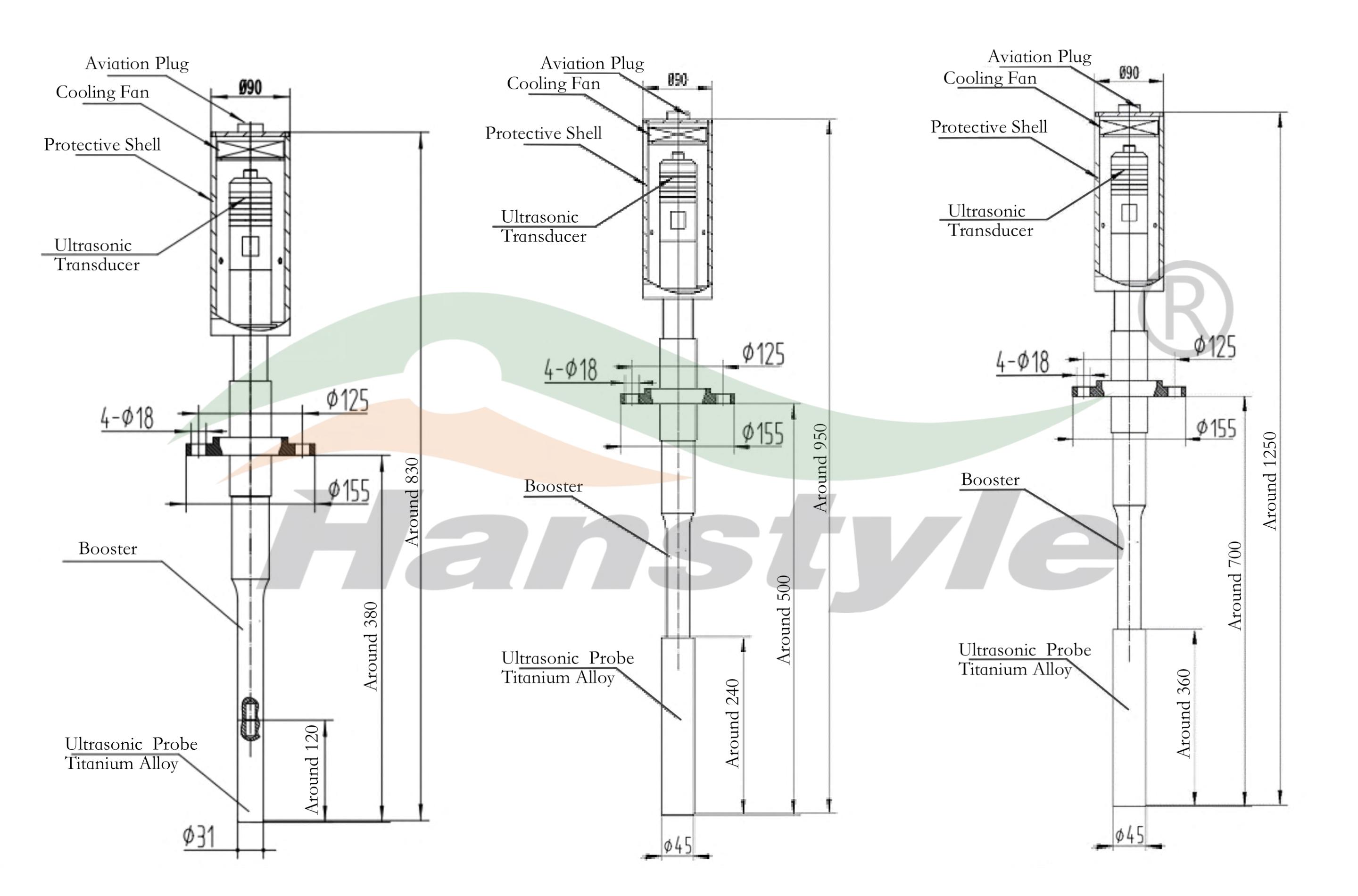
| Model | Frequency | Power | Input Voltage | Max Temp | Probe Diameter |
|---|---|---|---|---|---|
| H-UMP10 | 20 ± 1 KHz | 1000VA | 220±10% V | 800℃ | 31mm |
| H-UMP15 | 20 ± 1 KHz | 1500VA | 220±10% V | 800℃ | 45mm |
| H-UMP20 | 20 ± 1 KHz | 2000VA | 220±10% V | 800℃ | 45mm |
Common Product Specifications
| Temperature Resistance | Up to 800℃ |
|---|---|
| Material | Titanium Alloy Tool Head |
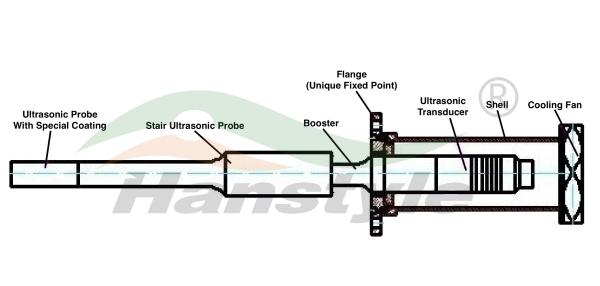
| Installation | Flange Connection |
Product Manufacturing Process
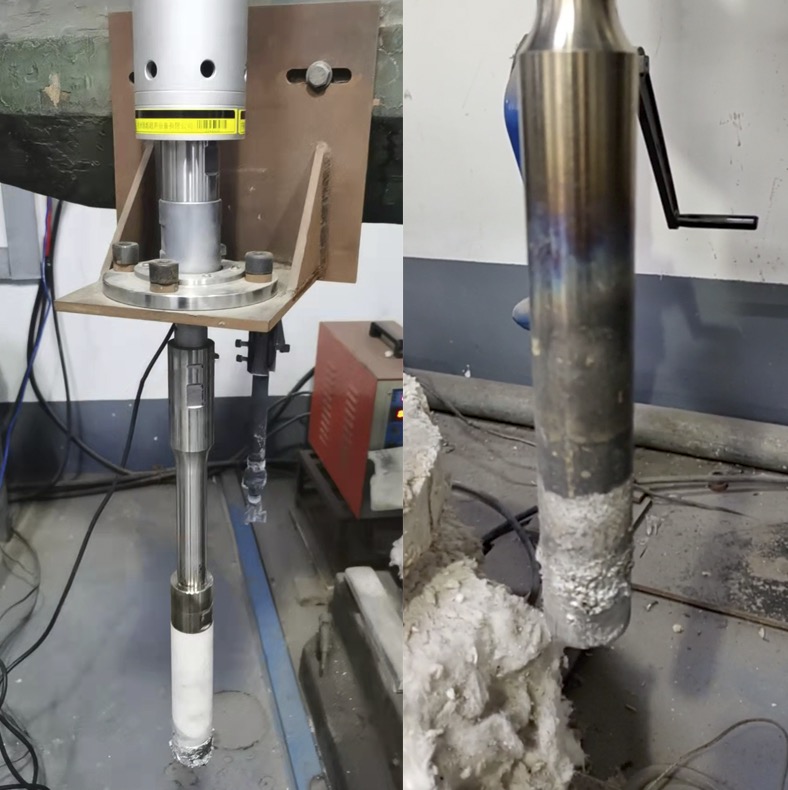
According to authoritative research, the manufacturing process of ultrasonic metal melt processors involves precision engineering to ensure the effectiveness of ultrasonic wave propagation in molten metals. The process starts with designing tool heads that withstand high temperatures and mechanical stresses. Utilization of high-tensile titanium alloys is critical for tool head production, ensuring durability and resistance to corrosion and high temperatures. Rigorous testing is conducted to fine-tune ultrasonic frequency and power settings, optimizing the ultrasonic effects for different metal melts. The entire manufacturing process emphasizes quality assurance and compliance with industry standards to produce reliable and efficient equipment.
Product Application Scenarios
In diverse industrial settings, ultrasonic processors find critical applications in improving metal properties and enhancing food industry processes. The use of ultrasonic technology in metal casting significantly influences crystallization, leading to finer equiaxed grain structures and reduced segregation. Additionally, in the food factory environment, ultrasonic waves enhance mixing efficiency, effectively eliminating air bubbles and ensuring homogenous mixtures. This technology is pivotal in producing high-strength metal alloys and uniformly mixed food products, offering substantial improvements in both fields.
Product After-Sales Service
We provide comprehensive after-sales support, including installation guidance, technical training for factory staff, and ongoing maintenance services. Our technical support team is available 24/7 to address any equipment-related concerns and ensure optimal operation through the product lifespan.
Product Transportation
Our products are securely packaged to withstand transportation stresses, ensuring they arrive intact at your factory. We offer flexible shipping options tailored to your needs, with global delivery services ensuring timely arrival.
Product Advantages
- High Temperature Resistance: Operates effectively at temperatures up to 800℃, ideal for various metal and food mixing processes.
- Easy Installation: Quickly installed using a flange connection, making it suitable for factory environments.
- Corrosion Resistance: Built with high-strength titanium alloy for durability in harsh conditions.
- High Power Output: Capable of delivering up to 3000W with a single radiant head, enhancing processing efficiency.
Product FAQ
- How do ultrasonic processors work in a factory setting? Ultrasonic processors utilize high-frequency sound waves to enhance processing, offering benefits like improved mixing and quality assurance.
- What are the benefits of using ultrasonic processors in food mixing? They improve texture and consistency by eliminating air bubbles, ensuring a homogenous mix in factory food production.
- Can ultrasonic processors handle high temperatures in industrial applications? Yes, they are designed to operate efficiently at up to 800℃, suitable for both metal and food processing factories.
- What materials are used in the construction of ultrasonic processors? High-strength titanium alloy is used, offering excellent durability and resistance to corrosion for factory environments.
- Are ultrasonic processors easy to install in a factory? Yes, they feature a simple flange connection system for quick and easy installation in various factory processes.
- What power output can be expected from these processors? The processors provide high power output, with a maximum of 3000W per radiant head, suitable for intensive factory applications.
- Are there any specific maintenance requirements for ultrasonic processors? Routine checks and careful monitoring ensure long-lasting performance and efficiency in a factory setting.
- How do ultrasonic processors contribute to quality control in food mixing? By providing uniform mixing, they help maintain consistent quality and flavor in factory-produced food items.
- Can ultrasonic processors be used for both metal and food processing? Yes, they are versatile enough to be employed in both fields, offering distinct advantages in factory processes.
- What kind of after-sales support is available for ultrasonic processors? We offer comprehensive after-sales services, including technical support, maintenance, and factory staff training.
Product Hot Topics
- How do ultrasonic processors enhance food mixing in a factory setting? Ultrasonic processors significantly improve factory food mixing processes by eliminating air bubbles and ensuring a uniform mixture. This results in enhanced texture and consistency in the final product, which is crucial in large-scale food production settings. By integrating this technology, factories can achieve superior mixing efficiency, leading to better quality control and a more consistent end product in terms of taste and texture.
- What impact do ultrasonic processors have on metal processing in factories? In a factory environment, ultrasonic processors play a vital role in metal processing by refining grain structures and reducing segregation during metal solidification. This technological advancement contributes to producing superior quality metal alloys with enhanced mechanical properties. Ultrasonic processing is increasingly adopted in factories to improve production efficiency and final product quality, offering significant advantages in competitive industrial applications.
- The role of ultrasonic technology in modern food factories Ultrasonic technology has become increasingly vital in modern food factories, providing solutions for efficient mixing and quality control. This technology eliminates air bubbles and ensures ingredient homogenization, leading to improved texture and consistency. By incorporating ultrasonic food mixing, factories can enhance product quality, reduce processing times, and uphold rigorous food safety standards, all of which are crucial in maintaining competitiveness in the food industry.
- Factory adoption of ultrasonic processors for enhanced production The adoption of ultrasonic processors in factories marks a significant leap towards improved production processes. These processors enhance both metal treatment and food mixing efficiency, contributing to better quality products with reduced production times. Factories that implement this technology can expect improved output, reduced waste, and enhanced product quality, making ultrasonic processors a valuable investment for industrial operations.
- Future trends in factory processing with ultrasonic technology The future of factory processing is leaning heavily towards the integration of ultrasonic technology, driven by its proven efficiency in enhancing production quality and speed. Ultrasonic processors enable factories to achieve superior consistency in metal treatment and food mixing, reducing energy consumption and improving output quality. As the demand for more efficient and sustainable manufacturing methods grows, factories are increasingly turning to ultrasonic technology as a solution.
- Efficiency gains in food factory mixing using ultrasonic processors Food factories are witnessing remarkable efficiency gains with the introduction of ultrasonic processors in their mixing processes. This technology enables faster mixing with better consistency, crucial for large-scale food production. Factories benefit from reduced processing times and enhanced product quality, aligning with the industry’s goals for increased productivity and sustainability while maintaining high standards of food safety and quality.
- Improving metal alloy production in factories with ultrasonic processors Ultrasonic processors have revolutionized metal alloy production in factories by enhancing the quality of metal crystallization and refinement. This technology produces finer and more consistent grain structures, reducing defects and improving the mechanical properties of metal alloys. Factories implementing ultrasonic processors experience significant improvements in metal quality, leading to longer-lasting and more reliable products in industrial applications.
- The synergy of ultrasonic technology and factory automation The integration of ultrasonic technology with factory automation systems is driving a new era of industrial processing. This synergy enhances precision and reduces human error, ensuring consistent quality in both metal and food production. Factories that embrace this technology benefit from increased output, reduced waste, and enhanced competitive advantage through more efficient and controlled production processes.
- Monetary benefits of using ultrasonic processors in factories Factories incorporating ultrasonic processors can expect substantial monetary benefits through increased production efficiency and reduced operational costs. The technology minimizes waste, improves product quality, and increases throughput, contributing to higher profit margins. Moreover, the durability and reliability of ultrasonic processors result in long-term savings on maintenance and labor, making them a financially sound investment for modern factories.
- Environmental impact of ultrasonic processors in industrial settings Ultrasonic processors contribute positively to the environmental goals of factories by reducing energy consumption and waste in industrial processes. Their efficiency in both metal and food mixing applications leads to reduced processing times and resources, lowering the overall environmental footprint. Factories adopting this technology can align with sustainable practices, meeting increasing regulatory demands for greener production processes.
Image Description