Factory-Direct 20KHz Ultrasonic Welding Nylon Transducer
Product Details
| Item NO. | Branson 902 Replacement |
|---|---|
| Frequency | 20KHz |
| Ceramic Diameter | 40mm |
| Qty of Ceramic | 4 |
| Connect Screw | 1/2-20UNF |
| Impedance | 10 |
| Capacitance | 8000pF |
| Input Power | 1100W |
Common Product Specifications
| Material | Titanium Alloy / Aluminum Housing |
|---|---|
| Testing Duration | 72 hours before dispatch |
Product Manufacturing Process
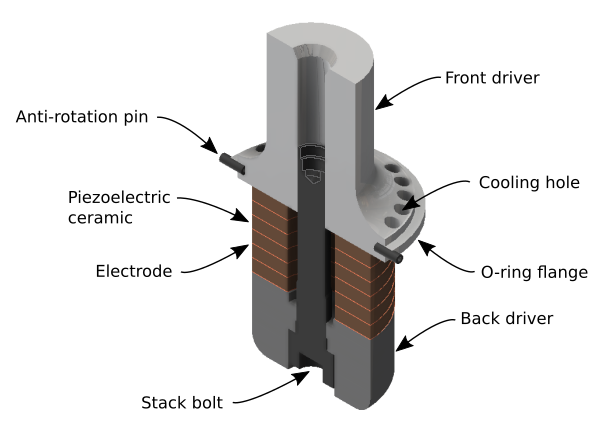
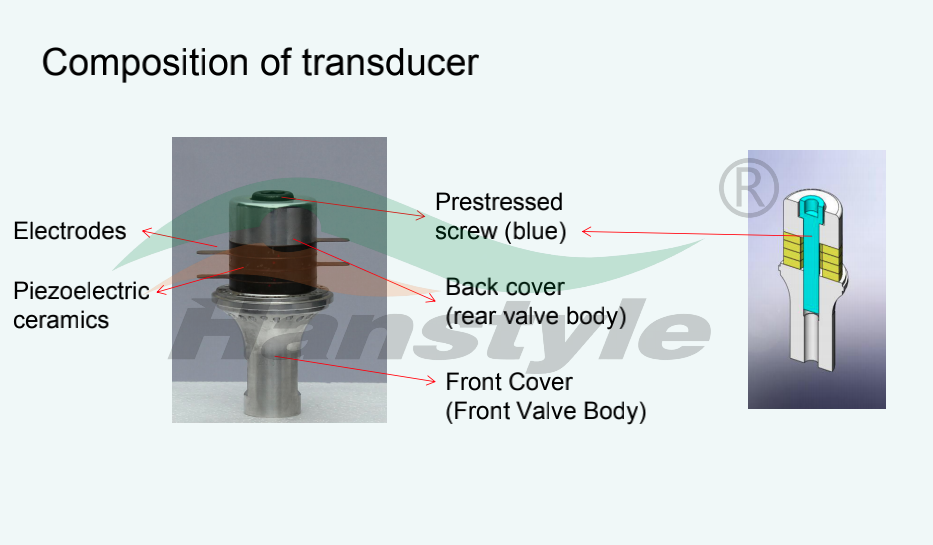
The manufacturing of ultrasonic transducers involves precise assembly to ensure performance stability. High-quality piezoelectric ceramics, often sourced from Germany, are used to ensure consistent frequency output and long-term reliability. During production, each transducer undergoes an aging process to ensure durability. The components are meticulously assembled and tested to meet stringent quality standards, ensuring optimal performance in industrial environments. This rigorous manufacturing process ensures that our transducers deliver reliable and efficient performance in ultrasonic welding applications.
Product Application Scenarios
Ultrasonic welding nylon transducers are widely used in diverse industrial sectors. In the automotive industry, they facilitate the assembly of components like dashboard panels and interior fixtures that require robust bonding. In electronics, they are vital for assembling device casings, ensuring precision and security for sensitive components. The medical sector utilizes these transducers for contamination-free assembly of critical items like filters and valves. Additionally, they are used in textile manufacturing for creating seamless and continuous welds in non-woven fabrics.
Product After-sales Service
We offer comprehensive after-sales support, including a warranty period and technical assistance. Our dedicated service team is available to address any issues promptly, ensuring customer satisfaction and product reliability throughout its lifecycle.
Product Transportation
All products are securely packaged using standard export packaging to prevent damage during transit. We have a supply capacity of 50000 pcs monthly, ensuring timely delivery through the Shanghai port.
Product Advantages
- Factory-direct pricing with high-quality assurance.
- Stable frequency and power output for reliable ultrasonic welding nylon applications.
- Robust performance due to high-quality piezoelectric materials.
- Customizable for specific industry requirements.
- Environmentally friendly bonding method without adhesives.
Product FAQ
- What is the main use of this transducer? It is used for ultrasonic welding nylon to achieve strong, precise joins in thermoplastics.
- What materials are compatible? Designed for use with various thermoplastics, especially nylon.
- How does ultrasonic welding work? Utilizes high-frequency sound to create molecular bonds without external heat or adhesives.
- What industries benefit the most? Automotive, electronics, medical devices, and textiles all leverage its advantages.
- Why choose factory-direct products? They offer cost savings and assured quality directly from the manufacturer.
- Is customization available? Yes, we offer tailor-made solutions to meet specific customer needs.
- What is the warranty policy? A standard warranty period applies, with options for extended coverage.
- How stable is the output? Designed for consistent performance with stable frequency amplitude.
- What about environmental impact? The process is clean, eliminating the need for solvents or adhesives.
- How is product shipment handled? Products are well-packaged and dispatched via the Shanghai port.
Product Hot Topics
- The Future of Factory Automation with Ultrasonic Welding Nylon: As industries push for more efficient manufacturing processes, ultrasonic welding nylon emerges as a key technology. Its capability to produce strong, precise bonds without adding weight or requiring adhesives is invaluable in modern assembly lines.
- Why Industries Prefer Factory-Direct Ultrasonic Solutions: Opting for factory-direct ultrasonic transducers ensures higher quality control and lower costs. With a direct supply line, businesses benefit from faster delivery times and better customization capabilities.
- Ultrasonic Welding in the Automotive Sector: Automotive manufacturing has increasingly adopted ultrasonic welding for components made from thermoplastics like nylon, enhancing vehicle durability and performance.
- The Role of Ultrasonic Welding Nylon in Reducing Environmental Impact: With no need for adhesives, ultrasonic welding nylon minimizes chemical waste, promoting cleaner, safer production environments.
- Understanding the Science Behind Ultrasonic Welding Nylon: The technology hinges on sound waves' ability to create heat and bond materials at a molecular level, offering a fascinating blend of physics and engineering.
- Navigating the Challenges of Moisture in Nylon Welding: Proper preparation and drying techniques are critical to achieving reliable welds when dealing with nylon’s moisture-absorbing properties.
- Advancements in Ultrasonic Transducer Design: Continuous research and innovation in transducer technology promise even more efficient and robust welding solutions for various industries.
- Cost-Benefit Analysis of Factory-Direct Transducers: When weighting cost versus performance, factory-direct transducers often emerge as the best option for companies seeking reliability and affordability.
- The Impact of Ultrasonic Welding on Medical Device Manufacturing: In environments where sterile and strong bonds are essential, ultrasonic welding provides a perfect solution.
- Customization in Factory-Direct Ultrasonic Welding Solutions: With options to tailor products to specific industry needs, manufacturers can optimize their production lines for efficiency and quality.
Image Description