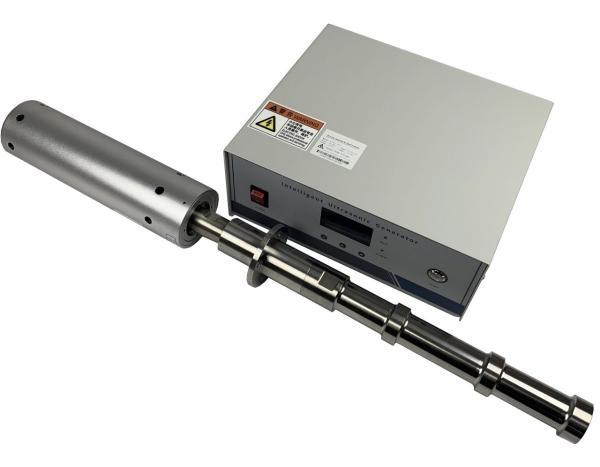

China 20KHz Ultrasonic Homogenizer for Industries
Product Main Parameters
| Model | Frequency | Power | Voltage | Pressure | Intensity | Probe Material | Generator |
|---|---|---|---|---|---|---|---|
| H-UH20-1000S | 20KHz | 1000 W | 220V | Normal | >10 W/cm2 | Titanium Alloy | Digital type |
| H-UH20-1000 | 20KHz | 1000 W | 220V | Normal | >10 W/cm2 | Titanium Alloy | Digital type |
| H-UH20-2000 | 20KHz | 2000 W | 220V | 35 MPa | >40 W/cm2 | Titanium Alloy | Digital type |
| H-UH20-3000 | 20KHz | 3000 W | 220V | 35 MPa | >60 W/cm2 | Titanium Alloy | Digital type |
Common Product Specifications
| Component | Description |
|---|---|
| Probe Material | Titanium Alloy |
| Frequency | 20KHz |
| Power | 1000-3000 W |
| Voltage | 220V |
Product Manufacturing Process
The manufacturing of ultrasonic homogenizers involves precision engineering to ensure efficient ultrasonic wave propagation and robust mechanical performance. The process typically begins with the selection of high-grade materials, such as titanium for the probe, due to its durability and compatibility. Advanced computer-aided design and machining techniques are used to fabricate components with tight tolerances. Quality control is critical, involving rigorous testing phases to guarantee the integrity and effectiveness of the ultrasonic transmission. China-based manufacturing facilities emphasize innovation, adhering to international standards to produce reliable and high-performance equipment. Research has shown that optimizing probe design and power settings enhances the homogenizer's effectiveness, facilitating superior emulsification and dispersion processes (Source: Journal of Ultrasonics).
Product Application Scenarios
Ultrasonic homogenizers are widely applied in diverse industrial scenarios. In the food and beverage industry, they are pivotal in improving the uniformity and stability of products like emulsions and dairy. In pharmaceuticals, these devices are critical for achieving precise particle size reduction crucial for bioavailability enhancement. The homogenization process is also vital in cosmetics for achieving fine dispersion of active ingredients. Studies indicate that using ultrasonic homogenizers in China increases efficiency and product consistency, which is essential for maintaining competitiveness in global markets (Source: International Journal of Food Science and Technology).
Product After-Sales Service
Our after-sales service includes a comprehensive warranty program, technical support, and maintenance services. Clients can access dedicated customer service teams located in China and other regions to address all inquiries and ensure that the homogenizer operates at peak efficiency.
Product Transportation
We prioritize secure and efficient logistics for transporting our ultrasonic homogenizers. Utilizing reputable global shipping services, we ensure timely delivery to destinations worldwide, accompanied by custom documentation to facilitate smooth transactions.
Product Advantages
- Superior particle size reduction for improved product uniformity
- China-manufactured for cost-effectiveness and quality assurance
- Adaptable for various industrial applications
- Robust design with a focus on sustainability and reliability
Product FAQ
- What industries benefit most from using ultrasonic homogenizers?
- How does an ultrasonic homogenizer differ from a mechanical one?
- Can the homogenizer handle high-viscosity materials?
- What maintenance is required for optimal homogenizer performance?
- Are custom configurations available?
- Is technical support available post-purchase?
- How does ultrasonic homogenization enhance extraction processes?
- What environmental considerations are taken during manufacture?
- Are training materials provided for new users?
- How do I choose the correct model for my needs?
Many sectors, including food, pharmaceuticals, and biotechnology, leverage ultrasonic homogenizers for their ability to enhance product consistency and quality. In China, the integration of such technology has bolstered efficiency across these industries.
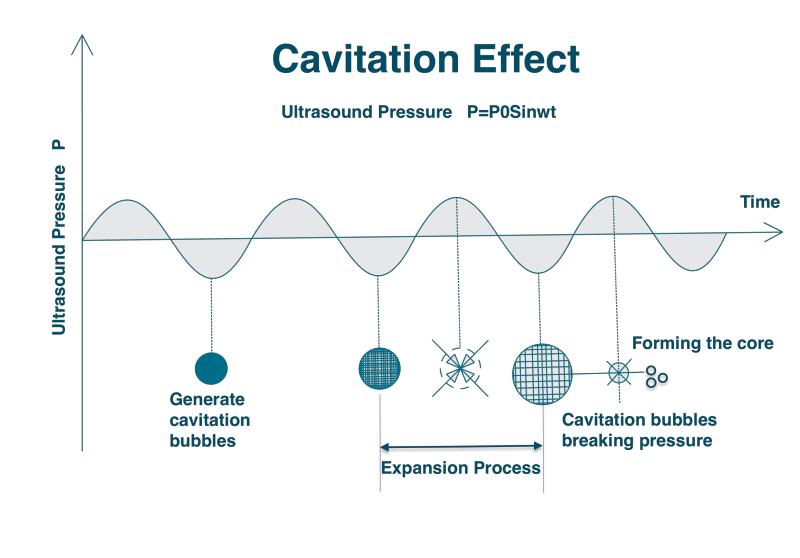
Ultrasonic homogenizers use sound waves to create cavitation, which breaks down particles, while mechanical homogenizers use physical force. The ultrasonic method often achieves more uniform results and is particularly advantageous in sensitive applications.
Yes, ultrasonic homogenizers are designed to manage a wide range of viscosities, making them versatile tools in industries ranging from cosmetics to pharmaceuticals.
Regular cleaning of the probe and periodic inspection of electrical components are recommended. Our China-based service centers provide convenient maintenance support.
Yes, we offer custom designs to suit specific industrial applications. Clients in China and across the globe can collaborate with our engineering team for tailor-made solutions.
We offer comprehensive technical support to ensure seamless operation. Our dedicated support teams across China are on standby to assist with any technical queries post-purchase.
Ultrasonic homogenizers increase extraction efficiency by using sound waves to disrupt cell walls, yielding higher quality and more complete extracts, especially in herbal and botanical applications.
Our manufacturing process in China incorporates sustainable practices to minimize environmental impact, including efficient energy use and waste reduction strategies.
Yes, comprehensive training resources are available, including manuals and video tutorials, to ensure that operators can maximize the homogenizer's capabilities.
Consider the specific application, volume, and material properties. Our China-based sales team can provide expert guidance to ensure you select the optimal model for your requirements.
Product Hot Topics
- How China's Development of Ultrasonic Technology Impacts Global Markets
- The Role of Ultrasonic Homogenizers in Sustainable Manufacturing
- China's Strategic Advances in Homogenizer Technology for Biotechnology
- Innovative Applications of Homogenizers in China's Food Industry
- Economic Implications of Homogenization Technology in China
- The Future of Ultrasonic Processing in China's Pharmaceutical Sector
- China's Investment in Homogenizer R&D and its Global Influence
- Homogenization Technology as a Catalyst for Innovation in China's Cosmetic Industry
- Enhancing Safety Standards with Ultrasonic Homogenizers in China
- Challenges and Opportunities in China's Ultrasonic Technology Landscape
The advancement of ultrasonic homogenization technology in China has positioned the country as a leader in industrial innovation. This shift not only enhances China's manufacturing capabilities but also sets a global benchmark for efficiency and precision in various sectors, reshaping market dynamics worldwide.
Adopting ultrasonic homogenizers in manufacturing processes significantly reduces resource consumption, leading to more sustainable practices. China’s commitment to integrating such advanced technologies highlights its dedication to eco-friendly industry standards and sustainable growth.
China is at the forefront of integrating ultrasonic homogenization into biotechnology applications, fostering breakthroughs in drug development and genetic research. This strategic adoption underlines China's pivotal role in advancing global biotechnology standards.
China's food industry benefits immensely from the introduction of ultrasonic homogenizers, enhancing product quality and safety. These innovations support China's objectives to lead in food technology and set new global standards for food production and processing.
The widespread use of ultrasonic homogenizers in China underscores their economic impact, boosting efficiency and productivity across sectors. This technology contributes to China's economic landscape by fostering industrial growth and diversification.
Ultrasonic homogenizers are revolutionizing China's pharmaceutical industry by optimizing drug formulation processes and ensuring quality. These technological advancements are pivotal in China’s strategy to maintain its competitive edge in pharmaceutical innovation.
Substantial investments in R&D for ultrasonic homogenization in China are catalyzing global technological advancements, promoting cross-border collaborations and knowledge transfer, and strengthening China's position as a leader in this domain.
Ultrasonic homogenizers are driving innovation in China's cosmetic industry, enabling the development of new formulations with enhanced aesthetics and functionality, thus amplifying market competitiveness.
By integrating ultrasonic homogenization technology, China enhances safety standards in manufacturing, promoting safer working environments and product integrity across various sectors.
Despite challenges, China's robust technological infrastructure and investment in ultrasonic technology present vast opportunities, paving the way for pioneering developments and fostering a favorable environment for technological growth.
Image Description