
Chemical Mixing Ultrasonic Homogenizer Manufacturer
Product Main Parameters
| Model | Frequency | Power | Voltage | Pressure | Material of Probe | Generator Type |
|---|---|---|---|---|---|---|
| H-UH20-1000S | 20KHz | 1000 W | 220V | Normal | Titanium Alloy | Digital type |
| H-UH20-3000Z | 20KHz | 3000 W | 220V | 35 MPa | Titanium Alloy | Digital type |
Common Product Specifications
| Intensity of Sound | Material Options |
|---|---|
| >10 W/cm² to >60 W/cm² | 304SS, 316L SS, Glass |
Product Manufacturing Process
Utilizing authoritative research, the ultrasonic homogenizer production involves precision engineering to ensure optimal cavitation effects. Casting and machining are critical, employing advanced techniques to form the titanium alloy probes and digital generators. Rigorous quality checks ensure compliance with industrial standards, facilitating the production of homogenizers that meet diverse chemical mixing needs.
Product Application Scenarios
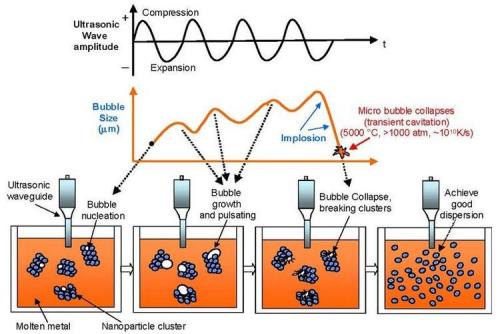
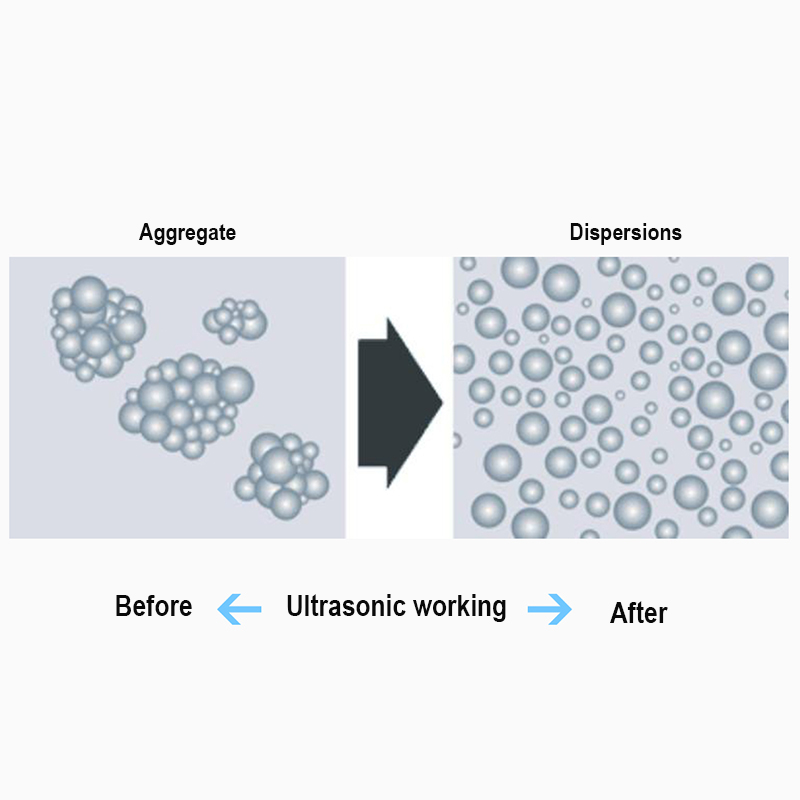
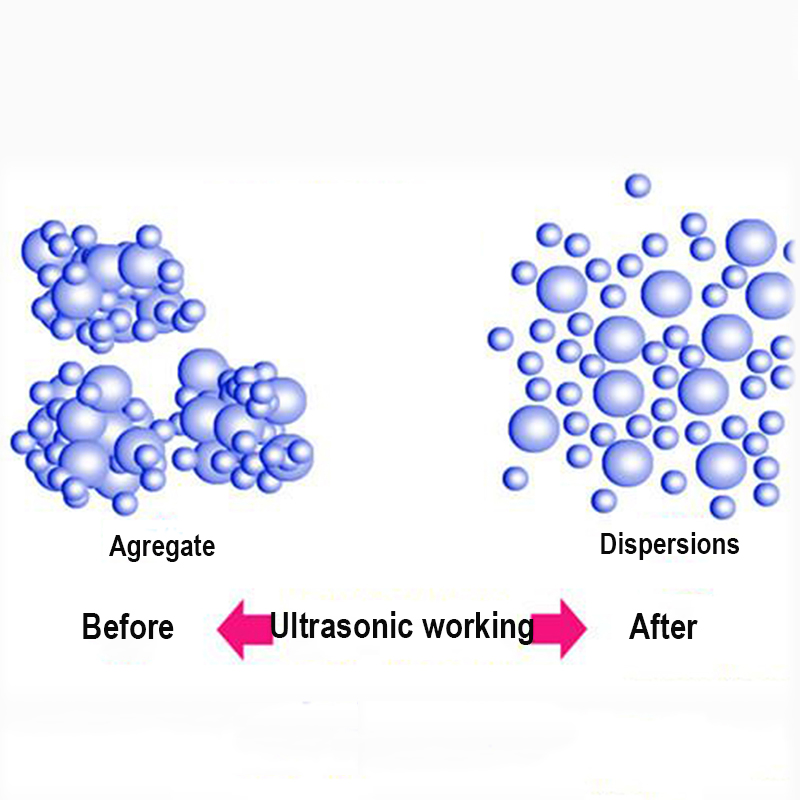
Extensive studies underscore the versatility of ultrasonic homogenizers in applications ranging from pharmaceuticals to food processing. Their role in cell disruption, emulsion creation, and dispersion of nano-materials makes them indispensable in achieving uniform chemical mixing and enhancing product quality across sectors.
Product After-Sales Service
- Comprehensive customer support and troubleshooting.
- Regular maintenance services and parts replacement.
- Year-long warranty coverage with optional extensions.
Product Transportation
- Secure packaging for safe delivery.
- Global shipping with tracking options.
- Customs and logistics management services available.
Product Advantages
- High efficiency and precision in chemical mixing.
- Durable construction with titanium alloy probes.
- Adjustable frequency and power settings for diverse applications.
- Ideal for both laboratory and industrial settings.
Product FAQ
- Q1: How does ultrasonic homogenization aid in chemical mixing?
A1: Ultrasonic homogenization uses cavitation energy to facilitate the uniform dispersion of particles, ensuring even chemical mixing and improved reaction efficiency. - Q2: What industries benefit from ultrasonic homogenizers?
A2: Industries such as pharmaceuticals, food and beverage, and cosmetics leverage ultrasonic homogenizers for their high-efficiency chemical mixing capabilities. - Q3: Can the homogenizer be used for CBD extraction?
A3: Yes, our ultrasonic homogenizers are specifically designed for efficient extraction processes, including CBD extraction. - Q4: Are custom sizes available?
A4: Custom sizes can be manufactured to suit specific laboratory and industrial requirements, ensuring optimal performance. - Q5: What makes titanium alloy probes advantageous?
A5: Titanium alloy probes offer superior durability and resistance to corrosion, making them suitable for various chemical mixing applications. - Q6: How do I maintain the homogenizer in optimal condition?
A6: Regular cleaning of the probe and generator, along with periodic inspections, ensures the long-term functionality of the homogenizer. - Q7: Does the homogenizer support high-viscosity materials?
A7: Yes, the ultrasonic homogenizer is equipped to handle high-viscosity materials efficiently, promoting effective chemical mixing. - Q8: What safety measures are integrated into the design?
A8: The design includes automatic shut-off features and overload protection to ensure safe operation during chemical mixing processes. - Q9: How can I ensure consistent results in chemical mixing?
A9: Employing correct settings and routine calibrations ensures consistent results and optimal homogenization during chemical mixing. - Q10: What is the expected lifespan of the homogenizer?
A10: With proper maintenance, the homogenizer offers a long lifespan, supporting numerous chemical mixing applications with reliability.
Product Hot Topics
- Topic 1: The Role of Ultrasonic Technology in Modern Chemical Mixing
- Comment: As technology advances, ultrasonic homogenizers are gaining prominence in the field of chemical mixing. Their ability to achieve uniform particle dispersion and enhanced chemical reactions makes them a pivotal tool in various industries, including pharmaceuticals and food processing.
- Topic 2: Enhancing Efficiency in Nano-Dispersions with Ultrasonic Homogenizers
- Comment: Nano-dispersions require precise homogenization techniques, and ultrasonic homogenizers offer an effective solution. By utilizing cavitation and high-frequency vibrations, these devices enable the production of consistent, high-quality nano-materials, driving advancements in fields like material science and nanotechnology.
Image Description