




20kHz Ultrasonic Homogenizer for Efficient Lab Sonochemistry
Introduction:
|
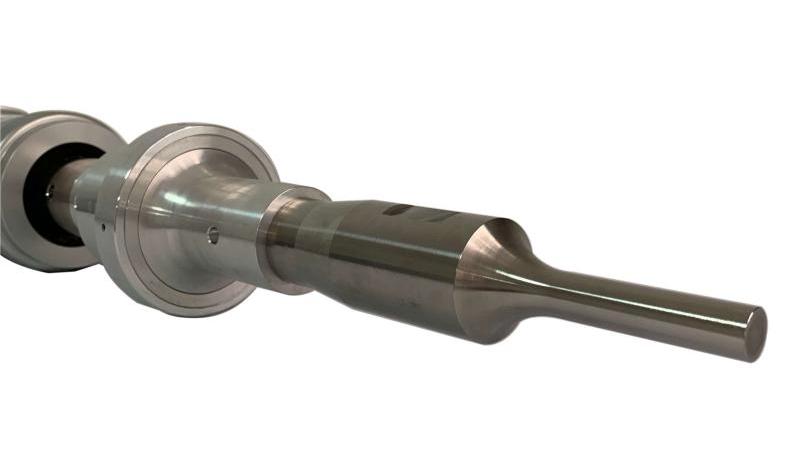
Ultrasonic homogenizer through ultrasonic cavitation reaction to achieve ultrasonic dispersion, emulsification, crushing and other tasks. The vibration of the tool head of the ultrasonic homogenizer is very rapid, causing bubbles in the surrounding solution to form and collapse rapidly, tearing cells and particles.Ultrasound is now widely used in industrial production, including making emulsions, dispersing nanoparticles and reducing the size of particles in suspension. The "cavitation" effect of ultrasonic wave in liquid forms local high temperature, high pressure or strong shock wave and micro jet, which propagates in the form of standing wave in the suspended body, causing the particles to be periodically stretched and compressed. The combination of these actions leads to the destruction of the agglomerate structure in the system, the enlargement of the particle gap and the formation of separate particles. |
 |
Application:
Reaction Acceleration: cavitation accelerates chemical and physical reactions. Fine Particle
Dispersion: nanoparticle processing etc.
Disruption and Cell Lysing: will break open biological tissues and cells to extract enzymes and DNA, prepare vaccines. This technology provides a method forultrasonically lysing cells and spores in a liquid flowing continuously or intermittently through a cylindrical reactor.
Homogenization: making uniform mixtures of liquids or liquid suspensions.
Emulsification: processing foods, pharmaceuticals, and cosmetics.
Dissolution: dissolving solids in solvents.
Degassing: removing gases from solutions without heat or vacuum.
 |
Demonstration Of The Working Performance:
Specifications:
|
Model |
H-UH20-1000S |
H-UH20-1000 |
H-UH20-2000 |
H-UH20-3000 |
H-UH20-3000Z |
|
Frequency |
20KHz |
20KHz |
20KHz |
20KHz |
20KHz |
|
Power |
1000 W |
1000 W |
2000W |
3000W |
3000 W |
|
Voltage |
220V |
220V |
220V |
220V |
220V |
|
Pressure |
Normal |
Normal |
35 MPa |
35 MPa |
35 MPa |
|
Intensity of sound |
>10 W/cm² |
>10 W/cm² |
>40 W/cm² |
>60 W/cm² |
>60 W/cm² |
|
Material of probe |
Titanium Alloy |
Titanium Alloy |
Titanium Alloy |
Titanium Alloy |
Titanium Alloy |
|
Generator |
Digital type |
Digital type |
Digital type |
Digital type |
Digital type |
Advantage:
-
- Increase the extraction rate of the extracted components and shorten the extraction time
- Reduce energy consumption and improve economic efficiency
- No heating is required during the extraction process, suitable for the extraction of heat-sensitive substances
- Compared with the traditional mixing and ball milling process, the operation cost per unit capacity can be greatly reduced. It is especially suitable for industrial production.
- For liquid-liquid mixture, the chemical reaction speed can be increased, the amount of additives can be reduced, and the fully mixed solution is not suitable for stratification for a long time.
- For the solid-liquid mixture, the easily agglomerated nanoparticles can be opened in a short time, and the dispersed ultrafine particles are not easy to agglomerate again.
- Comments From Clients:

Payment & Shipping:
| Minimum Order Quantity | Price(USD) | Packaging Details | Supply Ability | Delivery Port |
| 1 Piece | 1300~2800 | normal export packaging | 50000pcs | Shanghai |


Beyond its core functionalities, our Ultrasonic Homogenizer distinguishes itself through unparalleled efficiency in the application of ultrasonic homogenizing. Whether it's dispersing nanoparticles to create uniform suspensions, emulsifying compounds that traditionally resist mixing, or extracting biochemicals from cellular matrices, our device ensures reproducible results with minimal sample loss. Its 20kHz frequency is particularly suited for applications requiring high intensity but controlled environments to prevent the degradation of sensitive materials. This balance between power and sensitivity makes it an invaluable tool for researchers and industrial users alike, facilitating advances in fields ranging from nanotechnology to environmental science. In embracing Hanspire's 20kHz Ultrasonic Homogenizer, users are equipped with a versatile and powerful tool. Its design and functionality reflect our commitment to advancing scientific research and industrial processes. By incorporating this cutting-edge technology into your laboratory or production line, you empower your operations with the efficiency, precision, and reliability necessary to stay at the forefront of innovation.